Keto Breath While Fasting: Why It Happens and How to Fix It
Breath can change during fasting, but smell cannot measure fat loss. Learn about acetone, ordinary oral care, and fruity-breath symptoms that need urgent help.
Last updated
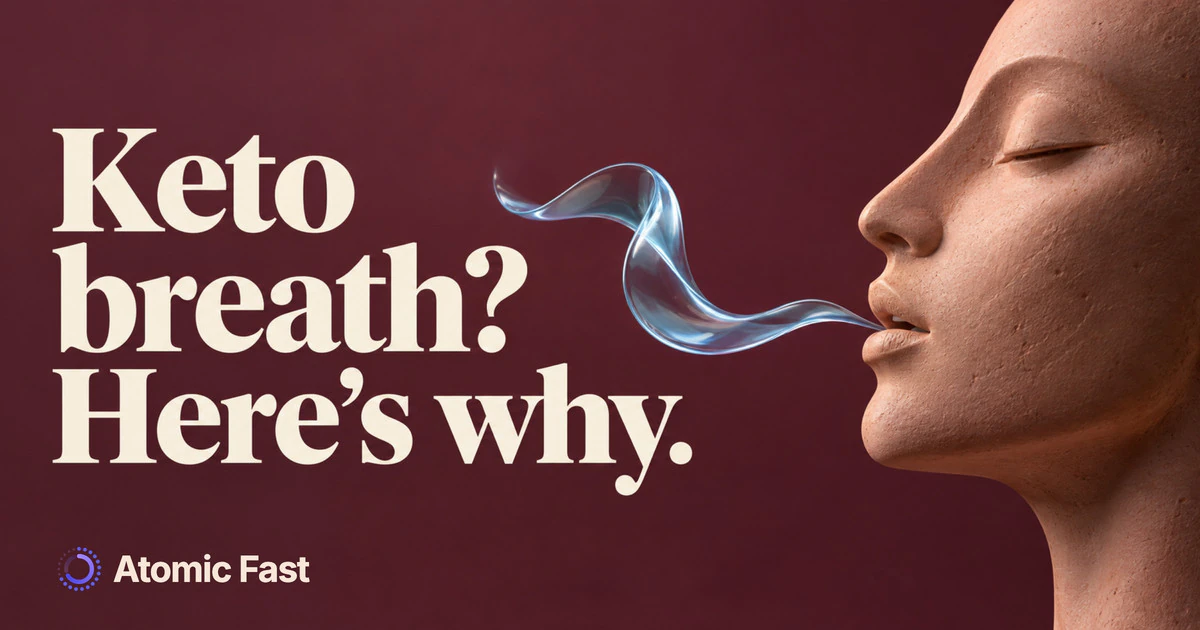
You brushed, you flossed, you drank your water, and late in your fast your breath still has a faintly fruity, almost nail-polish edge. A change in diet can alter breath, but smell alone does not establish the cause or how much body fat you are losing.
People call it “keto breath,” because it turns up on low-carb and ketogenic diets for the same reason it turns up in a longer fast. Fruity breath can also accompany a medical emergency, sometimes before someone knows they have diabetes. Other symptoms matter more than a reassuring fasting label.
The short version
Acetone from ketone metabolism can appear in exhaled breath, but perceived odor is not a reliable ketone test or proof of fat loss. Oral hygiene and adequate fluids may help ordinary bad breath; persistent changes deserve dental or medical assessment. Fruity breath with nausea, abdominal pain, breathing changes, marked thirst or confusion needs urgent medical help, especially with diabetes or an SGLT2 medicine.
Why your breath changes when you fast
Go long enough without eating and your body works through its stored sugar and leans harder on fat for fuel. That’s the shift behind the metabolic phases a fast moves you through, and it’s why the smell tends to show up later in a fast, or in the early days of eating low-carb, not an hour after breakfast.
Burning fat produces ketones. There are three: beta-hydroxybutyrate, acetoacetate and acetone. Your body can’t do much with acetone, and because the molecule is small it passes into the lungs and out on your breath. Researchers have measured it for decades as a sign of ketosis; a review in Obesity notes breath acetone runs around 1 part per million in healthy people who aren’t dieting and climbs as fat burning speeds up. Acetone is also what’s in many nail polish removers, which is why people describe the smell as fruity, solvent-like or faintly metallic.
Brushing cannot remove acetone carried in exhaled air, though it can address oral causes of odor. Whether brushing helps is not a reliable way to distinguish the two yourself.
Breath acetone varies with diet and other factors, as the review explains. Noticing or failing to notice a smell cannot grade your fasting routine.
How long it lasts
There is no dependable fasting-specific deadline for an odor to settle. NHS guidance on bad breath recommends a dentist if it persists despite self-care. Seek medical help sooner when other symptoms are present; do not wait out a supposed adaptation period.
What helps
For ordinary bad breath, maintain tooth, tongue and interdental cleaning. Drink water according to your needs and any prescribed limits. Sugar-free gum may help with mouth dryness, but it can contain calories and may cause bloating in some people.
Do not extend a fast, cut needed protein or drink excessive water to chase a breath reading or smell. None of those steps diagnoses the cause. Persistent odor, gum problems or dental pain need dental assessment; feeling unwell needs medical assessment.
When fruity breath is a warning
Read this part even if you skim the rest.
Fruity breath can be a sign of diabetic ketoacidosis (DKA), a medical emergency. It can occur with type 1 or type 2 diabetes, including before diabetes has been diagnosed. DKA happens when there isn’t enough insulin for cells to use sugar, so the body breaks down fat fast and acids called ketones build up in the blood. It’s a different thing from the mild ketosis of an ordinary fast.
Mayo Clinic’s DKA guidance describes symptoms that can develop rapidly: thirst, frequent urination, nausea, vomiting, abdominal pain, weakness, breathing difficulty, fruity breath and confusion. Untreated DKA can be fatal.
One more group needs to know this. Diabetes drugs called SGLT2 inhibitors (empagliflozin, dapagliflozin and canagliflozin, for example) can cause DKA with blood sugar that looks normal or only slightly high, and a review of these cases lists fasting and low-carb or ketogenic diets among the triggers. A normal glucose reading doesn’t rule it out.
So the rule is simple. If fruity breath comes with those symptoms, seek urgent medical help. Follow your diabetes testing and emergency plan if you have one, but do not delay care to obtain a reading. Fasting with diabetes is something to plan with your doctor first; it’s one of the situations where a professional should sign off before you fast at all.
The absence of a known diabetes diagnosis does not establish that fruity breath is harmless.
Where the app fits
Atomic Fast can record when the fast started. Its Fat Burning and Deep Ketosis labels begin at fixed elapsed-hour thresholds, not measured ketone levels. They cannot confirm the cause of a breath change or rule out a medical emergency.
Frequently asked questions
Does keto breath mean my fast is working? Smell is not a reliable test of ketosis, fat loss or benefit. You do not need a breath change to justify an ordinary meal schedule.
Will chewing gum break my fast? Check the product and the rules you are following. Sugar-free does not necessarily mean calorie-free, and gum does not address a medical cause of fruity breath.
Why might brushing not fix the smell? Some acetone is exhaled from the lungs. Dental and other causes can coexist, so the response to brushing does not establish a diagnosis.
How can I distinguish ordinary breath changes from DKA? You cannot safely do it from smell alone. Fruity breath with marked thirst, vomiting, belly pain, breathing changes or confusion needs urgent care, even without a previous diabetes diagnosis.
Sources
Sources checked: October 11, 2026.
-
Anderson JC. et al. (2015), Measuring breath acetone for monitoring fat loss: Review. Obesity (Silver Spring, Md.) — Explains breath acetone and the factors affecting measured concentrations; perceived odor is not the same test.
-
Mayo Clinic — Diabetic ketoacidosis: Symptoms & causes — Symptoms and emergency risks of DKA, including newly recognized diabetes.
-
Somagutta MR et al. (2021), Euglycemic Diabetic Ketoacidosis and Sodium-Glucose Cotransporter-2 Inhibitors: A Focused Review of Pathophysiology, Risk Factors, and Triggers. Cureus — Reported triggers and the possibility of ketoacidosis without markedly elevated glucose.
-
NHS — Bad breath — Oral care and when persistent breath problems need a dentist.
Curious where in your fast the smell kicks in? Atomic Fast’s timer is free on the App Store and Google Play.
This article is for general education and isn’t medical advice. If you have diabetes, take medication (especially insulin or an SGLT2 inhibitor), are pregnant or breastfeeding, have a history of disordered eating, or are considering fasts longer than 24 hours, talk to a healthcare professional first, and seek emergency care if fruity breath comes with thirst, nausea or confusion.
Try Atomic Fast free
Track your fasts, log your meals, and see how they affect each other, on iPhone and Android.


 Scan to download