Feeling Cold While Fasting: What It Can and Cannot Tell You
Cold hands during fasting do not identify the cause. Learn when to review food and comfort, when to seek medical advice, and why a timer cannot assess the symptom.
Last updated
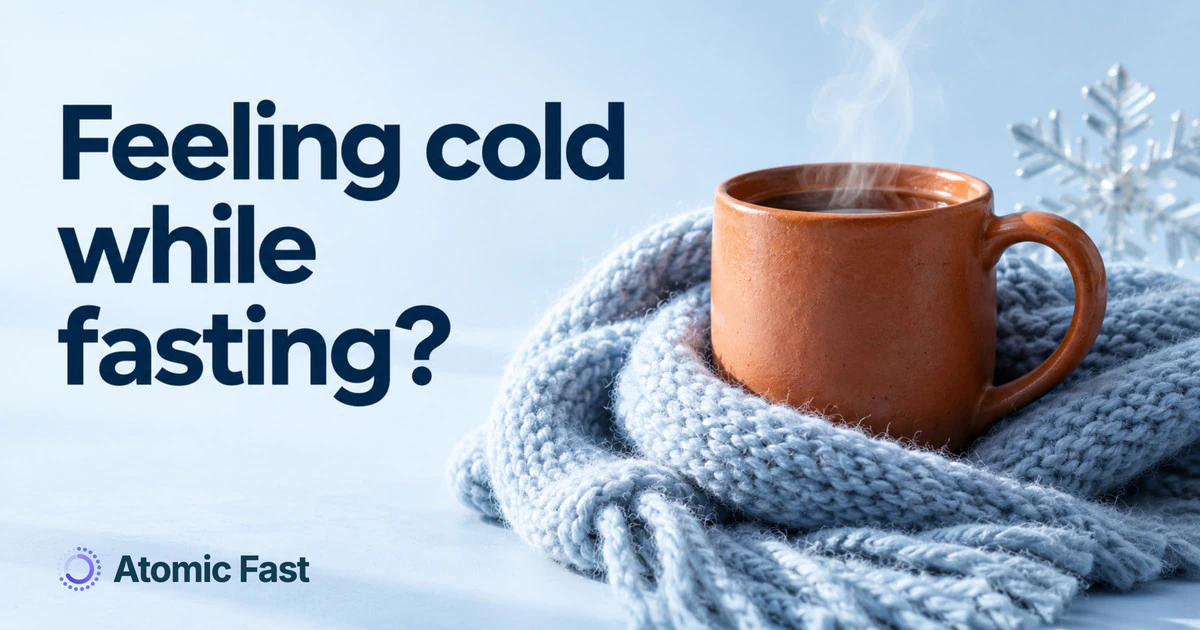
You’re a few hours past your last meal, the room hasn’t changed, and your hands are suddenly cold. Maybe your feet too. It’s a common thing to notice on a fast, and it catches people off guard because nothing about the room got colder. You did.
Feeling chilly does not identify a cause or tell you whether continuing the fast is safe. A brief change may be manageable, but new, persistent or pronounced cold sensitivity deserves attention.
The short version
Feeling cold can coincide with changed eating habits, but fasting duration cannot tell you why it is happening. Keep warm, eat adequately and do not insist on preserving the fast when you feel unwell. Persistent cold intolerance can have causes such as anemia, thyroid disease or circulation problems. Seek medical advice for recurring symptoms, and urgent help if cold comes with confusion or other serious illness.
Why fasting can leave you cold
Eating and energy availability are part of temperature regulation, but that broad physiology cannot explain a particular episode of cold hands. The evidence does not establish that everyone develops harmless fasting cold or adapts after a fixed number of days.
MedlinePlus lists several causes of cold intolerance, including anemia, underactive thyroid, blood-vessel problems and inadequate nutritional status. A symptom that first appears during a fast can still have another cause.
Do not infer a glucose level from feeling cold. If you also feel shaky, dizzy or confused, particularly while taking diabetes medicine, follow your care plan and seek help as appropriate. Our dizziness guide covers why those symptoms should not be dismissed as adjustment.
Warm up without making the timer the priority
Put on warm layers or move to a warmer place. A warm drink may be comfortable, but you do not need to keep it calorie-free at the expense of eating when you need food. Avoid trying to exercise through dizziness or illness.
Review whether your routine leaves enough room for regular, adequate meals. If you have unintentionally lost weight, are restricting more than intended or feel unable to relax the fasting rules, discuss that with a healthcare professional.
There is no special virtue in enduring cold to reach a goal. Our first-week guide is about evaluating a routine, not treating discomfort as proof it is working.
When cold is worth a doctor’s look
New, persistent or extreme cold intolerance should be discussed with a clinician. Improvement after food does not establish the diagnosis.
Get it checked when the cold stops behaving like that:
- Cold on every fast that doesn’t ease after you eat, plus other symptoms. Mayo Clinic lists “more sensitivity to cold” among the symptoms of an underactive thyroid, alongside tiredness, dry skin and thinning hair. Blood tests diagnose it, so ask your doctor rather than guessing.
- Fingers or toes that turn white, then blue. If your digits visibly change color in the cold or under stress and feel numb or prickly, that can be Raynaud’s. Mayo Clinic describes “areas of skin that turn white then blue,” with cold temperatures or stress as the usual triggers. Mention it to a doctor, especially if it’s new.
- Cold that comes with feeling unwell. Shakiness that doesn’t settle when you eat, confusion, a racing heart, or cold as part of a bigger picture of not eating enough. Get urgent help for confusion or severe illness. If you use glucose-lowering medicine, follow your low-glucose plan rather than waiting to warm up.
This is also one of the real reasons some people shouldn’t fast without a doctor’s sign-off. If you’re on medication, managing a health condition, or your body keeps sending odd signals, a quick conversation beats self-diagnosis.
Where Atomic Fast helps (and where it can’t)
Atomic Fast’s free timer can supply an elapsed-time record. Hour three versus hour fourteen does not classify cold hands as normal or abnormal.
Meal logging can help you remember what you entered, but estimated nutrition is not an assessment of whether you are eating enough. The app cannot diagnose thyroid disease, anemia, circulation problems or the cause of cold intolerance.
Frequently asked questions
Is feeling cold while fasting always normal? No. It can have several explanations, and a timer cannot establish which applies. New, persistent or extreme sensitivity to cold needs medical advice.
Does feeling cold prove that I am burning fat? No. It is not a measure of fat use or a health benefit.
Do I have to keep fasting while I warm up? No. You can stop and eat. Protecting a fasting window should not take priority over symptoms or your care plan.
Should I ask for a thyroid test? Discuss the symptoms with your clinician, who can decide what assessment is appropriate. Thyroid disease is one possible cause, not the only one.
When is it urgent? Confusion, severe weakness or other signs of serious illness need urgent help. If you take diabetes medicine and suspect low glucose, follow your treatment plan promptly.
Sources
Sources checked: October 11, 2026.
-
MedlinePlus — Cold intolerance — Possible causes and reasons to seek assessment.
-
Mayo Clinic — Hypothyroidism: Symptoms & causes — Cold sensitivity can occur with other hypothyroidism symptoms; symptoms alone do not diagnose it.
-
Mayo Clinic — Raynaud’s disease: Symptoms & causes — Explains cold-related color changes and circulation symptoms in fingers and toes.
Atomic Fast is free on the App Store and Google Play, with the timer and fasting stages included at no cost.
This article is for general education and isn’t medical advice. If you’re pregnant or breastfeeding, under 18, managing a health condition like diabetes or thyroid disease, taking medication, or have a history of disordered eating, talk to a healthcare professional before fasting.
Try Atomic Fast free
Track your fasts, log your meals, and see how they affect each other, on iPhone and Android.


 Scan to download