Bloating While Fasting: Meals, Drinks and What to Check
Bloating after a fast can have several causes. Review drinks, gum, portions and fiber, learn what the evidence supports, and know which warning signs need care.
Last updated
You went sixteen hours without eating, and somehow your waistband feels tighter than it did on three meals a day. An hour after you break the fast, your stomach is round, tight and noisy. It feels backwards. Less food should mean less bloat.
The timing is useful to notice, but it does not establish the cause. Drinks, meal size, constipation or a digestive condition can all deserve a closer look.
The short version
Swallowed air and bacterial fermentation can contribute to gas. Fizzy drinks, gum and changes in portions or fiber are reasonable things to review when you change your eating hours. Bloating can also happen without excess gas, and fasting-specific evidence is limited. Try manageable changes to eating pace and portions, but get persistent symptoms or warning signs assessed rather than assuming the first meal explains them.
Where the gas actually comes from
The NIDDK describes two routes. Everyone swallows a little air when eating and drinking, and you take in more when you eat or drink too fast, chew gum, drink fizzy drinks or smoke. The rest is made in your large intestine, where bacteria break down carbohydrates your small intestine didn’t absorb, and give off gas as they do it.
That second route matters for fasters. Johns Hopkins Medicine, citing the NIDDK, notes that most carbohydrates can cause gas while fats and proteins cause little. The sugars it names include lactose (milk, cheese, ice cream), fructose (onions, pears, wheat, some soft drinks), sorbitol (apples, pears, peaches, prunes, and many sugar-free candies and gums) and raffinose (beans, cabbage, broccoli).
So the useful question isn’t why fasting bloats you. It’s what you’re swallowing, and what’s reaching your colon undigested.
Four ways a fasting routine adds to it
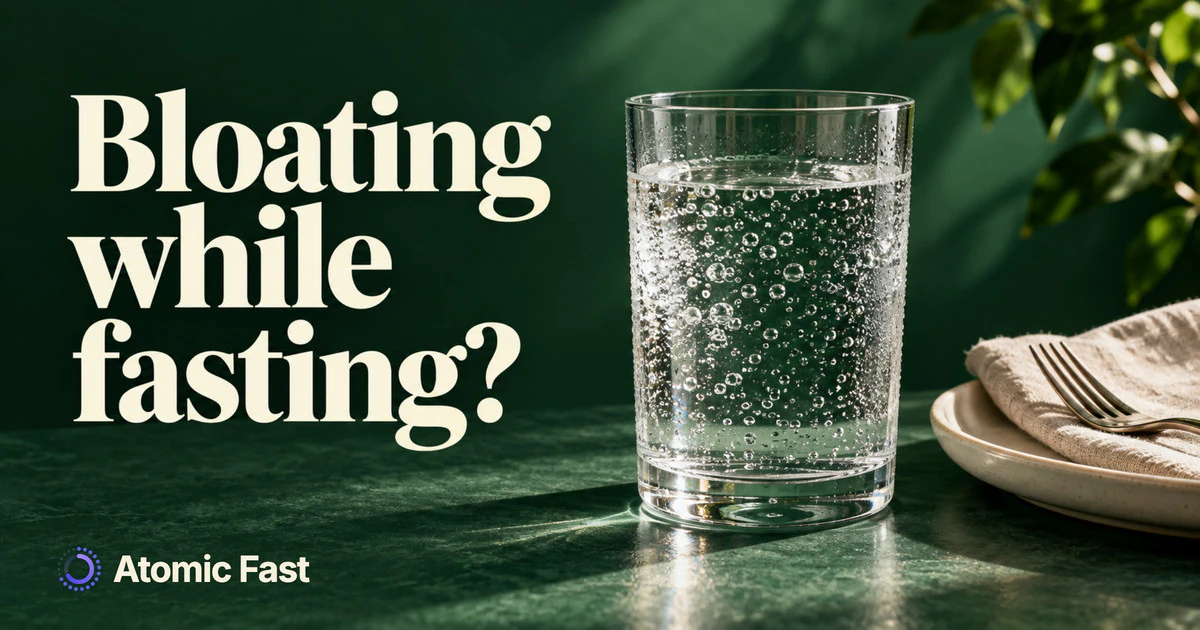
The fizz. Sparkling water is a fasting staple because it feels like something without costing anything. But Mayo Clinic is blunt about carbonated drinks: they release carbon dioxide gas. Three cans across a morning fast is a lot of gas in an empty stomach.
The gum. Sugar-free gum is the other fasting crutch, and it hits you twice. Mayo notes that chewing gum or sucking on hard candy makes you swallow more often than normal, and part of what goes down is air. And the sweeteners in many sugar-free gums and mints are sugar alcohols like sorbitol, mannitol and xylitol, which the NIDDK lists among the sweeteners that can lead to excess gas. Sugar-free does not always mean calorie-free. The bloating question is separate from how you define your fasting window.
The first meal is a feast. After 16 hours, you’re hungry, and a compressed window pushes you to fit a day’s eating into two meals. Big portions eaten quickly are a reliable bloat recipe: more air goes down with each rushed bite, the stomach stretches, and more carbohydrate makes it to the colon to ferment. It’s the same reason what you eat to break a fast matters more than people expect.
The healthy plate, all at once. People who start fasting often start eating better in the same week: a big bowl of beans, a pile of broccoli, raw onion, an apple. Mayo lists legumes among the high-fiber foods that cause gas, and Hopkins names onions and apples by sugar. All good food. Eaten together, as the first thing your gut sees in 16 hours, it’s a lot of fermentable material in one go.
Why the fasting hours can feel calmer
Plenty of people feel flatter during the fast and puffy only after eating. There’s a plausible bit of physiology behind that. Between meals, the gut runs a cleaning cycle called the migrating motor complex. A 2020 review in Nutrients describes it as the intestinal housekeeper: cycles of quiet and strong contractions during fasting that appear to push leftovers from the small intestine into the colon. The strongest bursts come about every 90 to 120 minutes in people. Starting a meal suppresses the pattern.
Nobody has shown that a 16:8 schedule fixes bloating through this, so don’t read it as a treatment. The mechanism does not establish why a particular person feels bloated, or show that the fast itself is rarely involved.
What to do with this
Make the first meal smaller and slower. Mayo’s advice is to eat and drink slowly so you swallow less air. Put the fork down between bites. If your window allows two meals, let the first one be the modest one.
Adjust portions rather than banning whole food groups. Use foods you already tolerate and avoid suddenly concentrating a large amount of fiber in one meal. Moving every vegetable to later in the window has not been established as a treatment. Seek individual advice if repeated restrictions are making it hard to eat adequately.
Try still water in place of fizz and gum. Coffee or tea may suit some people, but they can also aggravate other symptoms. If you can’t give up sparkling water, try one glass instead of three and see what changes.
Add fiber gradually. If you’ve just raised your fiber intake, raise it slowly. Too much too fast is a classic cause of gas, the flip side of the constipation some people get early in a fast, where fiber is part of the fix.
Take a short walk after you eat. Mayo suggests it, and it costs nothing to try.
Test one suspect at a time. If dairy seems to set you off, drop it for a week and watch. Gas after milk products can be a sign of lactose intolerance, per Hopkins, and that’s worth knowing whether you fast or not.
If you log meals in Atomic Fast (by photo, a quick description or a barcode), the app estimates when digestion will be complete from when you ate and what the meal held, including its calories, fat and portion. A huge first meal gets a later estimate than a modest one. It’s an estimate from the clock and the meal’s contents, not a reading from your body, and it can’t tell you why you’re bloated. It can make it obvious how much you packed into that first sitting.
When bloating isn’t about fasting
Occasional bloating is common and rarely serious on its own. Mayo Clinic says to talk to a healthcare professional if gas or gas pains won’t go away or get in the way of daily life, and to see one if they come with bloody stools, a change in the consistency or frequency of your bowel movements, weight loss, constipation or diarrhea, or nausea or vomiting that keeps coming back. Prolonged stomach pain or chest pain needs care right away.
If bloating sticks around after you’ve stopped fasting, or you already live with IBS or another gut condition, check with a doctor before you start adjusting your diet on your own. And if you’re unsure fasting suits you at all, some people should clear it with a doctor first.
Frequently asked questions
Does sparkling water break a fast? Plain, unsweetened sparkling water has no calories, so it doesn’t break a fast aimed at weight or blood sugar. It can still leave you bloated, because carbonated drinks release carbon dioxide gas in your stomach. If you’re puffy, it’s one of the first things to cut back.
Is sugar-free gum OK while fasting? Check the product and the rules of your fast; sugar-free gum can still contain calories. For bloating, chewing makes you swallow air, and many sugar-free gums are sweetened with sugar alcohols such as sorbitol or xylitol, which cause gas in some people.
Why am I bloated after breaking my fast but not during it? Meal size, pace and ingredients are possible contributors, but the timing does not identify a cause. A smaller, slower meal is one reasonable change to try.
How long does fasting bloat last? Duration depends on the cause. Get advice if it persists, keeps returning or interferes with daily life. Pain, bleeding, vomiting or unexplained weight loss should not be dismissed as an adjustment period.
Can fasting help with bloating? Some people find their gut feels calmer during the fasting hours, and the between-meal cleaning cycle in the small intestine is a plausible reason. There’s no good evidence that intermittent fasting treats bloating, though, so don’t use it as a substitute for getting persistent symptoms looked at.
Sources
Sources checked: October 11, 2026.
-
NIDDK — Symptoms & Causes of Gas in the Digestive Tract — Explains swallowed air, fermentation and other causes of gas symptoms.
-
Johns Hopkins Medicine — Gas in the Digestive Tract — Background on gas-producing carbohydrates and food intolerance.
-
Mayo Clinic — Belching, gas and bloating: Tips for reducing them — Practical guidance on eating pace, carbonation, gum and individual food triggers.
-
NIDDK — Eating, Diet, & Nutrition for Gas in the Digestive Tract — Food and sweetener changes that may help manage gas.
-
Livovsky DM et al. (2020), Food, Eating, and the Gastrointestinal Tract. Nutrients — Physiology of eating and gut motility; not a trial of fasting as a bloating treatment.
-
Takahashi T. et al. (2012), Mechanism of interdigestive migrating motor complex. Journal of neurogastroenterology and motility — Explains the migrating motor complex and its approximate cycle timing.
-
Mayo Clinic — Gas and gas pains: Symptoms & causes — Persistent symptoms and warning signs needing care.
Track your fasts and meals together with Atomic Fast, free on the App Store and Google Play.
This article is for general education and isn’t medical advice. If bloating is severe, persistent, or comes with pain, bleeding, weight loss or other worrying symptoms, see a healthcare professional. If you’re pregnant, managing a health condition, taking medication, or have a history of disordered eating, check with one before starting or changing a fasting routine.
Try Atomic Fast free
Track your fasts, log your meals, and see how they affect each other, on iPhone and Android.


 Scan to download