Constipation While Fasting: What to Check and What Helps
Constipation after changing your eating hours? Review food, fiber, fluids and routine, and learn when symptoms need medical advice instead of more waiting.
Last updated
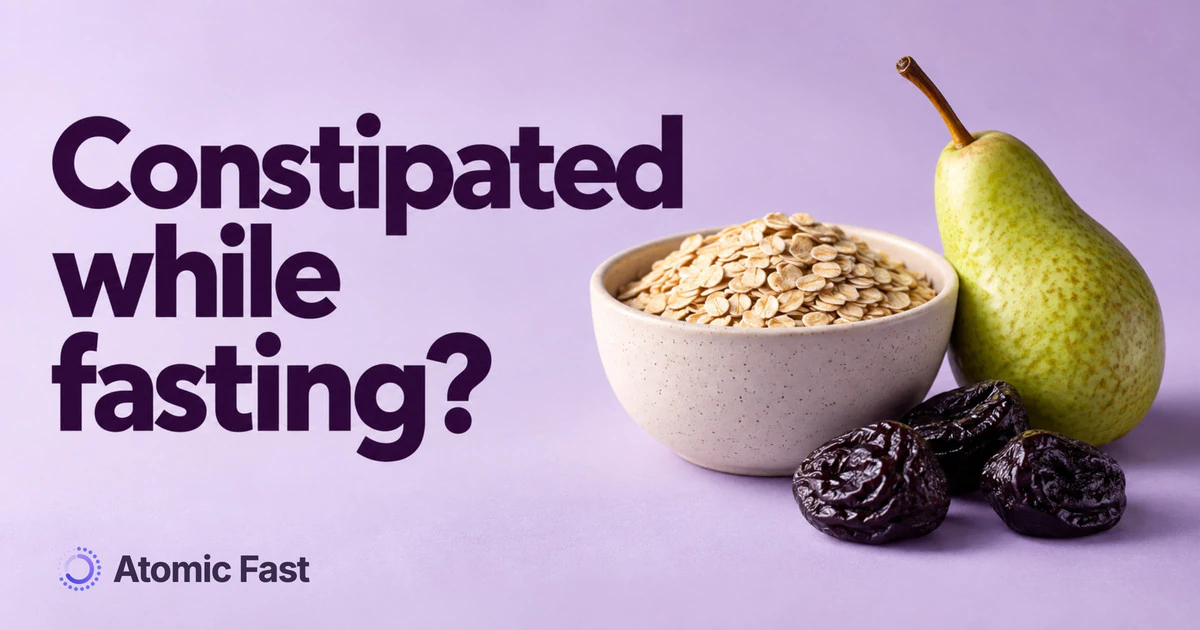
You started fasting to feel lighter, and a week or two in you feel the opposite of light. Things have gone quiet. If your bathroom routine changed after you narrowed your eating window, food, fluid and routine changes are worth checking. The timing does not rule out another cause.
The short version
Changing eating hours can also change food volume, fiber, fluid intake and bathroom habits. Those are reasonable things to review, but constipation is not something everyone should expect or wait through. Add fiber gradually, drink according to your needs and any fluid restrictions, and keep moving as able. Seek advice if symptoms do not improve with self-care, and get prompt help for bleeding, persistent pain, vomiting or inability to pass gas.
Why a fast backs things up
A few ordinary things stack up when you compress your eating into a shorter window.
Less food, less bulk. Stool is largely built from what you eat. Eating less overall can change stool frequency, but two meals do not necessarily mean less food than three. Hard or painful stools matter more than a change in meal count alone.
Less water. This one sneaks up on people. Changing meals can change your opportunities to drink and the water you get from food. And your large intestine draws water out of stool before it passes, which Johns Hopkins says is how dehydration ends up as hard, dried-out stool. It’s the same shortfall that leaves some people woozy or lightheaded a few hours into a fast: inadequate fluid intake can contribute to several symptoms, though dizziness has other causes too.
Less fiber. When the window’s tight, the bulky, fiber-rich foods (fruit, vegetables, whole grains) are often the first to fall off the plate. NIDDK includes inadequate fiber among possible constipation contributors.
Your morning trigger moved. A lot of people have a reliable bowel reflex a little after breakfast and that first coffee. Push your first meal to noon and you’ve rescheduled the reflex along with it. Johns Hopkins notes that eating stimulates the digestive system end to end, so a regular meal schedule may support regular bowel movements. Your gut is waiting on a habit that changed.
What actually helps
The fixes map straight onto the causes, and most of them cost nothing.
Keep fluids available through the day. Ordinary time-restricted eating allows water. Needs vary with activity, health and diet; follow any fluid restriction you have been given. NIDDK recommends discussing an appropriate amount with your clinician, especially when increasing fiber.
Add fiber, but ramp it up slowly. Johns Hopkins says a typical approach works up to 25 to 30 grams a day for women and 30 to 38 grams for men, from a mix of soluble fiber (oats, apples, bananas, cooked vegetables) and insoluble fiber (leafy greens, nuts, the skins and seeds of produce). Add it gradually: pile on fiber overnight and you’ll trade constipation for gas and bloating. Prunes and prune juice pull extra weight here, thanks to sorbitol, a sugar alcohol that draws a bowel movement along once it reaches the colon.
Use a hot drink on purpose. Hot drinks, especially caffeinated coffee or tea, can speed things up, per Johns Hopkins: the heat helps the gut move and caffeine stimulates the bowels. Handy for fasters, since plain black coffee is close to zero calories and won’t derail a fast aimed at weight or blood sugar. What you stir into it is what changes things.
Move a bit. Johns Hopkins calls physical activity essential, even when you’re bloated and don’t feel like it. A short walk counts, and it’s the fix people skip most.
Protect that morning reflex. If your gut used to fire after breakfast, a hot drink at the usual time can keep some of that rhythm even when your first meal is hours away.
Don’t over-tighten the window. If you leapt straight to a hard schedule, easing back for a bit gives you more hours to eat, drink and get enough fiber in. Going too hard too soon is one of the common beginner fasting mistakes, and your digestion is often where it shows first.
How long it usually lasts
There is no dependable fasting-specific deadline for constipation to settle. Do not assume it has to last a week or two before you can seek help. NIDDK recommends medical advice when symptoms do not improve with self-care.
Atomic Fast puts today’s logged fasts, meals and water together on a Daily timeline. It records what you enter, not everything you consumed, and cannot diagnose constipation. A record may help you recall changes when discussing symptoms.
When it’s more than the fasting
Get medical advice if constipation persists despite self-care, keeps returning or concerns you. The NIDDK says to see one right away if it comes with blood in your stool or bleeding from your rectum, constant abdominal pain, being unable to pass gas, vomiting, fever, lower back pain, or losing weight without trying. Those aren’t fasting quirks.
Anyone with an existing gut condition, or on medication that affects digestion, is better off checking before making fasting a habit. Fasting isn’t right for everyone, and some people should clear it with a doctor first regardless of how their digestion behaves.
Frequently asked questions
Does coffee help or hurt constipation while fasting? For most people it helps, since caffeine and the heat of the drink both stimulate the bowel. Black coffee also won’t meaningfully break a fast aimed at weight or blood sugar. The catch is what you pour in: milk, cream and sugar add calories, and too much coffee on an empty stomach can leave you jittery.
How much water should I drink? Needs vary, and a fasting article cannot set a personal fluid target. Water is allowed during ordinary time-restricted eating. Follow any prescribed fluid limit and ask for advice if you’re unsure how much is appropriate.
Should I take a fiber supplement or a laxative? Try whole-food fiber and more fluids first, added gradually. Johns Hopkins says psyllium or guar gum supplements are safe for most people when used occasionally and as directed; drink extra water with them. Be wary of “herbal” laxative teas and powders, which are poorly regulated, and talk to a pharmacist or doctor before relying on any laxative regularly.
Does constipation mean fasting is bad for me? The symptom does not establish its cause. Review what changed, avoid tightening the window further and get advice if self-care does not help. Pain, blood or other warning signs need prompt assessment.
Will it go away by itself? It depends on the cause. Do not wait for an arbitrary fasting-adjustment period if symptoms persist, worsen or worry you.
Sources
Sources checked: October 11, 2026.
-
Johns Hopkins Medicine — Foods for Constipation — Food, fiber and practical bowel-habit guidance.
-
NIDDK — Symptoms & Causes of Constipation — Defines constipation and lists causes and warning signs.
-
NIDDK — Eating, Diet, & Nutrition for Constipation — Gradual fiber increases and individualized fluid advice.
-
NIDDK — Treatment for Constipation — Self-care options and when to seek further treatment.
Keep your fast, meals and water in one place with Atomic Fast, free on the App Store and Google Play.
This article is for general education and isn’t medical advice. If constipation is severe, persistent, or comes with pain, bleeding or other worrying symptoms, see a healthcare professional. If you’re pregnant, managing a health condition, taking medication, or have a history of disordered eating, check with one before starting or changing a fasting routine.
Try Atomic Fast free
Track your fasts, log your meals, and see how they affect each other, on iPhone and Android.


 Scan to download