8 Beginner Fasting Mistakes (and the Easy Fix for Each)
The eight most common intermittent fasting mistakes new fasters make, and the simple fix for each one — so your first two weeks feel manageable and the habit sticks.
Last updated
Most people don’t quit intermittent fasting because it doesn’t work. They quit because of a handful of avoidable mistakes in the first two weeks that make it feel harder, or emptier, than it needs to be. The good news is they’re the same mistakes almost everyone makes, which means the fixes are well worn too.
Here are the eight that trip up beginners most, and what to do instead.
The short version
A fasting target should fit adequate meals, sleep, medication and ordinary life. Starting too restrictively, dismissing symptoms or expecting a timer to guarantee results can make the plan less useful. Review what you actually eat and how you feel, and change or stop the schedule when needed. There is no requirement to reach sixteen hours or to keep tightening the window.
Mistake 1: Starting on hard mode
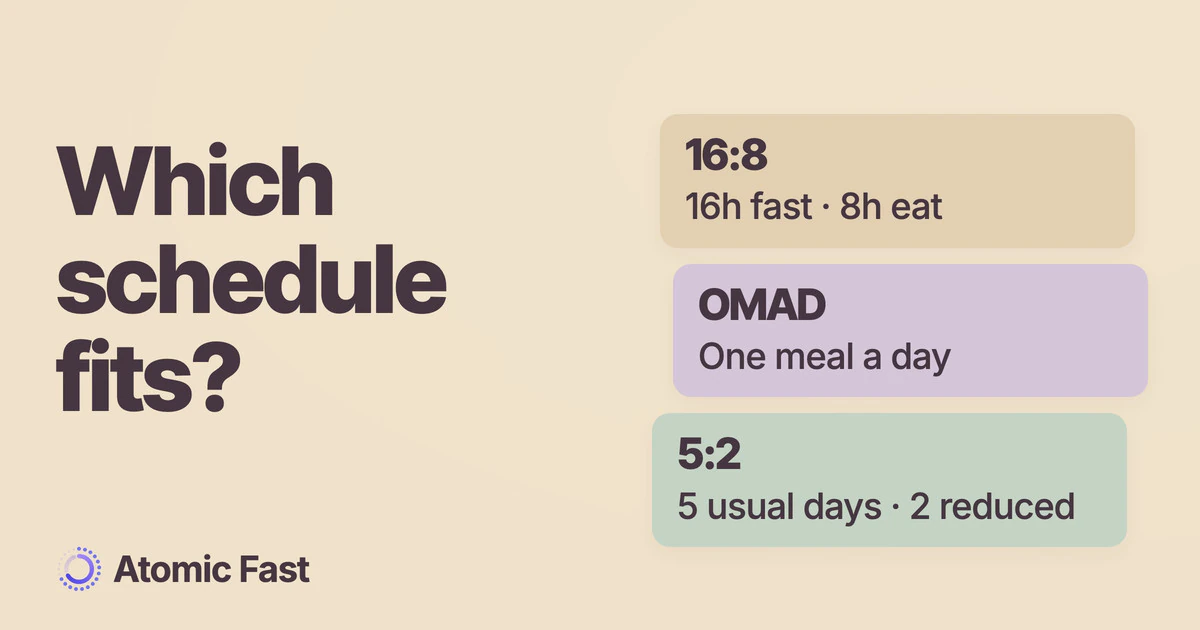
Plenty of beginners read about OMAD (one meal a day) or a 20:4 window and decide that’s where they’ll start, because harder must mean faster. It usually means quitting by Thursday. Going from three meals plus snacks to a single meal is a huge jump, and the hunger and grumpiness that follow feel like proof you “can’t fast.”
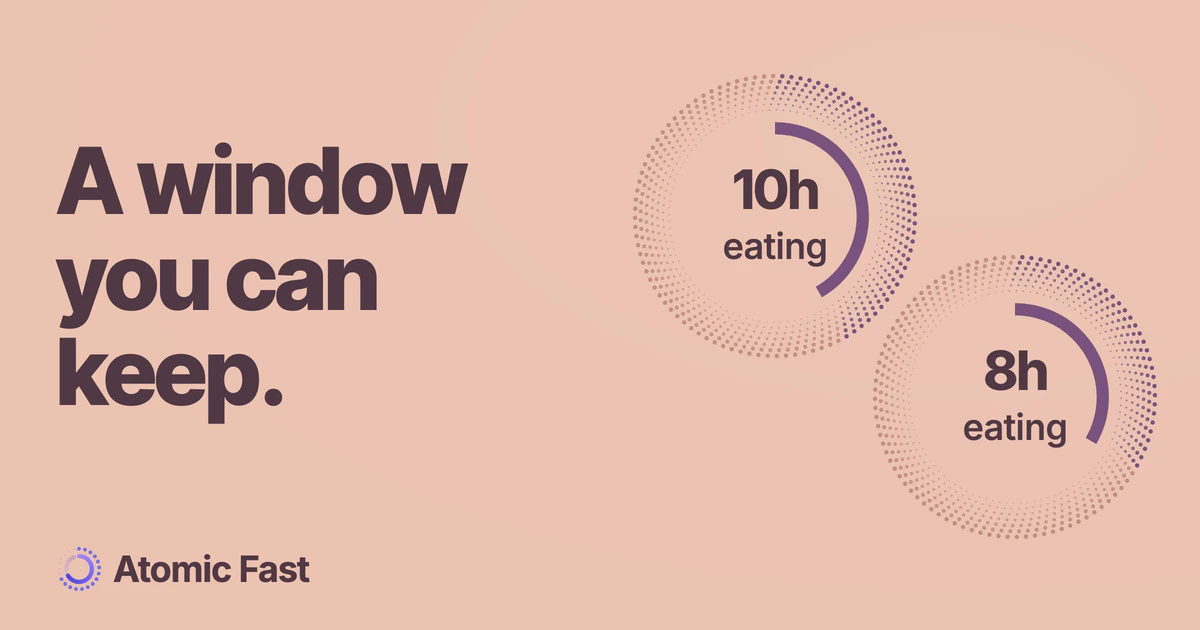
The fix: start wide and tighten over a few weeks. Try 12:12 first, then 14:10, then 16:8 once that feels routine. A gentler on-ramp gives your appetite time to adjust to the new schedule, and you’re far more likely to still be doing it a month later. If you want a feel for what an easy first day looks like, we walked through one hour by hour in your first 16:8 day.
Mistake 2: Picking a window that fights your life
The “best” window on paper is the one that gives up breakfast, or the one some influencer swears by. The best window in practice is the one you can keep on a busy Tuesday. If you love dinner with your family and you force a window that closes at 4 p.m., you’ll break it most nights and feel like you failed.
The fix: match the window to your real life, not the other way around. Big evening eater? Keep your window in the afternoon and evening and skip breakfast. Fade at night? Eat earlier and close up shop by mid-afternoon. Both work, because the schedule you actually stick to beats the “optimal” one you abandon. We broke down how to choose in how to pick a fasting window you’ll actually keep.
Mistake 3: Explaining every symptom as dehydration
Fluids matter, but headache, shakiness or dizziness cannot be diagnosed as dehydration or sodium loss from a fasting history alone. Drink according to your needs and any prescribed limits; more is not always better.
Do not use a pinch of salt as a universal remedy. Stop a fast that is making you unwell and review symptoms appropriately. The headache guide and dizziness guide describe reasons to seek care.
Mistake 4: Breaking the fast without realizing it
This one’s sneaky. A splash of milk in your coffee, a “just to take the edge off” handful of nuts, a diet-friendly juice, a stick of gum with sugar in it. Individually they feel harmless. Some of them have calories, and calories during the fasting hours mean you’re not really fasting anymore.
The fix: during the fast, stick to water, black coffee, and plain tea. Save anything with calories for your eating window. If you’re not sure where a specific drink or add-in falls, we sorted through the gray areas in what actually breaks a fast. The simple rule for week one: if it has calories, it goes in the window.
Mistake 5: Eating like the window is a reward
Here’s the mistake that quietly sinks the most results. People fast all morning, then treat noon like they’ve earned a feast, and pack more into eight hours than they used to eat in twelve. The window ends, the fast was real, and nothing changes on the scale, because there was never a calorie deficit to begin with.
The fix: eat normal, satisfying meals in your window, not “I fasted so I can have whatever” meals. Fasting helps mostly by making it easier to eat a bit less overall, not by adding a magic effect on top. When people follow a window but don’t lose weight, this is usually why. We ran through all the usual culprits in why the scale won’t move on intermittent fasting.
Mistake 6: Skimping on protein
When beginners do cut back, protein is often the first thing to go, because it’s easier to graze on carbs. The problem is that a tighter window with too little protein can cost you muscle along with fat, though the effect depends on the whole diet, activity and individual circumstances.
The fix: build each meal around a solid protein source and keep some resistance training in the mix. In a trial of people who lifted weights on a 16:8 schedule with protein kept high, they held onto muscle and strength while losing fat (Moro 2016). Fasting doesn’t have to mean eating less of everything, just eating in a tighter window, and protein is the part you don’t want to shortchange.
Mistake 7: Weighing yourself every single day
The scale is noisy. Body weight swings a couple of pounds day to day with sodium, carbs, water, and hormones, none of which is fat. Weigh in every morning and you’ll hit a day the number jumps, decide fasting “stopped working,” and start second-guessing a plan that’s fine.
The fix: weigh weekly, same day, same conditions, and watch the trend over a few weeks instead of any single reading. A flat or bouncy week can easily hide a real downward slope underneath the water-weight noise. Better yet, don’t let the scale be your only scoreboard, because waist, energy, sleep, and cravings often improve before the number catches up.
Mistake 8: Treating a short day as failure
This is the mistake that ends fasting habits for good. You planned a 16-hour fast, life happened, you ate at hour 14, and you write off the whole day as blown, which somehow turns into skipping tomorrow too, and then it’s over. Perfectionism, not hunger, is what kills most fasting streaks.
The fix: a 14-hour fast is still a 14-hour fast. Your window is a target you aim at, not an exam you pass or fail, and one short day counts for nothing against two consistent weeks. Aim at the same window tomorrow and move on. Consistency you can keep beats a perfect streak you’ll break once and abandon.
Where the app fits
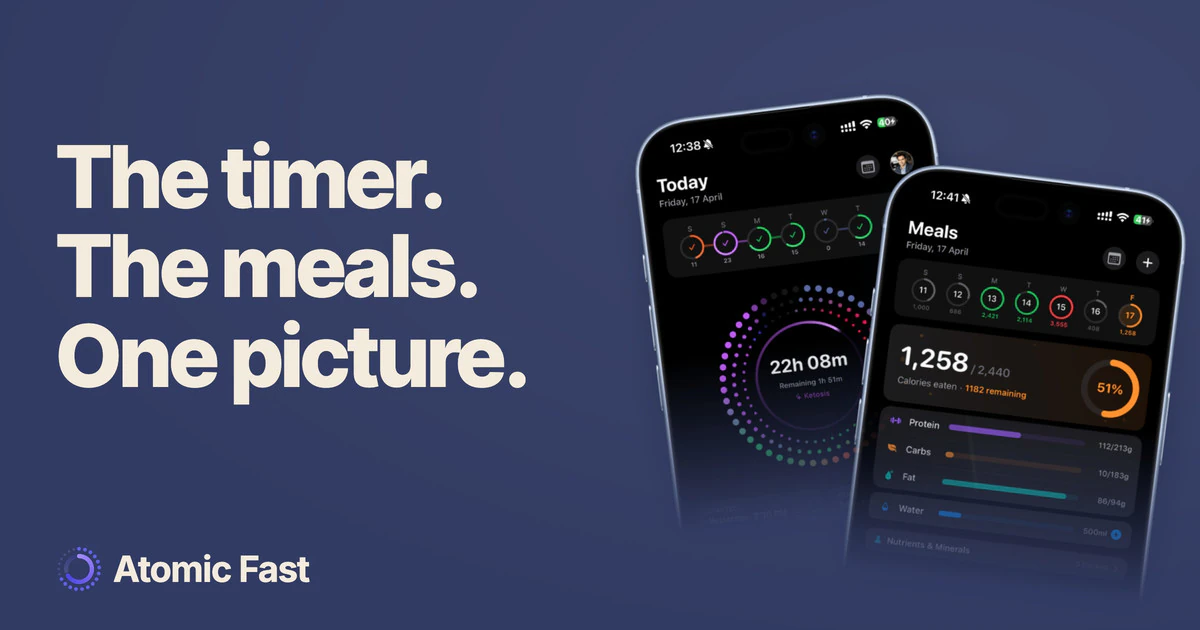
Atomic Fast records duration and the meals you save. Its phase labels follow fixed elapsed hours, and its digestion estimate does not identify when benefits begin.
Use the record to recall what happened, rather than as a medical explanation for symptoms or proof of a calorie deficit. For the controls themselves, see how to start and save a fast.
Frequently asked questions
What’s the most common beginner fasting mistake? Starting too aggressively. Jumping straight to a very short eating window makes the first week feel awful and leads a lot of people to quit. Easing in from 12:12 to 14:10 to 16:8 is far more sustainable.
Why am I fasting but not losing weight? The usual reason is no calorie deficit: it’s easy to eat back everything you skipped once your window opens. Liquid calories, low protein, short sleep, and daily water-weight swings all play a part too. There’s a full breakdown in why the scale won’t move.
Does coffee break a fast? Not on its own. Black coffee has almost no calories, and neither do plain tea or water, and they may fit ordinary eating-window rules; caffeine and medical-test rules need separate consideration. What ends the fast is everything people add to the cup: milk, cream, sugar, syrups, and the oat-milk latte that’s really a small meal. More detail in what breaks a fast.
How long until fasting feels easy? There is no validated deadline. Do not wait for an adjustment period if the routine makes you unwell or interferes with adequate meals, sleep or medication.
Do I need to worry about losing muscle? Protein is one consideration, not the only determinant. Adequate nutrition and suitable resistance activity matter, but a small lifting trial cannot guarantee muscle preservation for everyone.
Sources
Sources checked: October 11, 2026.
-
Johns Hopkins Medicine — Intermittent Fasting: What is it, and how does it work? — General clinical education and groups advised not to fast; an adjustment estimate is not a symptom-safety rule.
-
NIDDK — Low Blood Glucose (Hypoglycemia) — Low-glucose risks, symptoms and the need for an individual medication and treatment plan.
-
Moro T et al. (2016), Effects of eight weeks of time-restricted feeding (16/8) on basal metabolism, maximal strength, body composition, inflammation, and cardiovascular risk factors in resistance-trained males. Journal of translational medicine — A specific eight-week trial in trained men; its result is not a universal nutrition prescription.
Ready to make it easier to keep? Almost every beginner mistake on this list comes down to two things: starting harder than you need to, and expecting the clock to do work that only a real calorie deficit can do. Start gentle, pick a window that fits your life, drink your water, keep protein up, judge progress by the week, and forgive the short days — and fasting stops feeling like a test you keep failing. Atomic Fast handles the timing and the tracking, so the only thing left to work on is the habit. Download on the App Store or Google Play.
This article is for general information and isn’t medical advice. If you’re pregnant, have a history of disordered eating, or take medication for a condition like diabetes or blood pressure, talk to your doctor before starting intermittent fasting.
Try Atomic Fast free
Track your fasts, log your meals, and see how they affect each other, on iPhone and Android.


 Scan to download