How to Pick a Fasting Window You'll Actually Keep
How to choose an intermittent fasting window that fits your real day — your hunger, your meals with people, and your workouts — so you actually stick with it.
Last updated
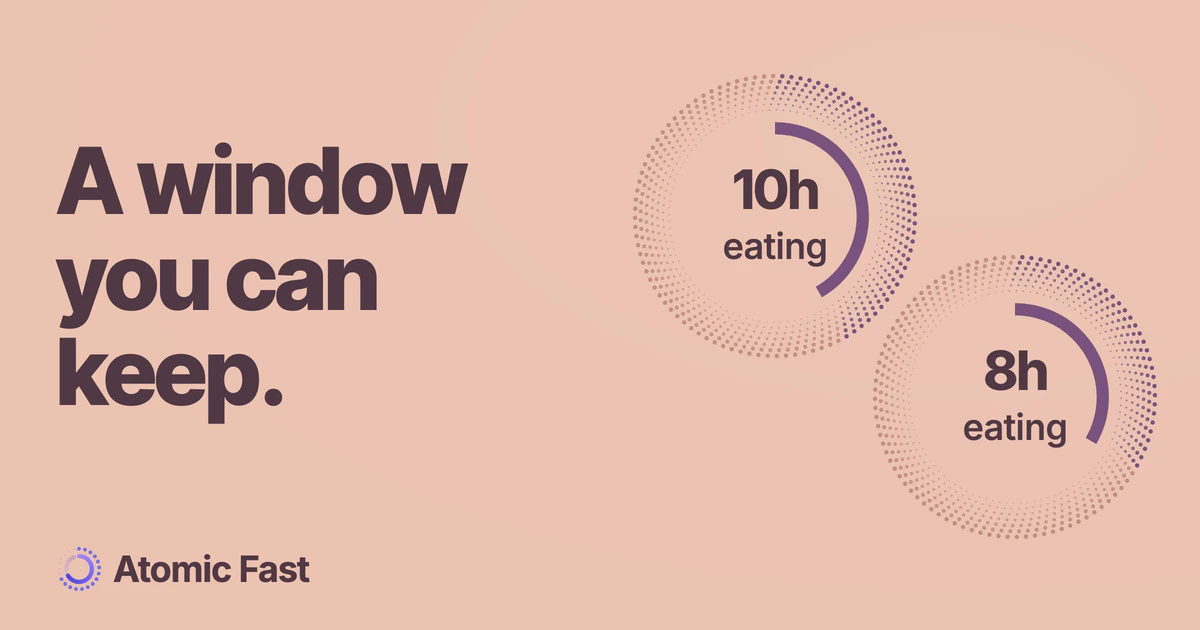
A fasting window has to fit meals you need to eat, medication instructions, work and the people you share food with. Starting with a number from the internet can leave those details out.
Before choosing hours, consider whether fasting is appropriate at all. A manageable schedule is only one part of that decision.
The short version
If you are trying a daily eating window, map the meals and obligations you need to keep before choosing its start and end. A wider window may be easier to organize; it does not need to become stricter each week. Earlier-versus-later research does not establish one best schedule for everyone. Reassess a plan that interferes with adequate meals, medication, sleep or wellbeing.
Start with the meals you need
Write down a normal week. Include family dinner, work breaks, breakfast before a demanding morning and food required with medication. Those are practical constraints, not failures of discipline.
For example, an early window that closes at 3 p.m. conflicts with a family dinner at 7 p.m. A noon opening may conflict with breakfast needed before morning training. You do not have to remove an important meal simply to reproduce a schedule someone else uses.
Exercise adds another question: can you eat and recover adequately around it? Feeling weak or unwell is not a test to pass. Our guide to fasted workouts discusses the limits of treating fasted exercise as a weight-loss shortcut.
Earlier and later windows have trade-offs
A 2026 follow-up study reported retained weight-loss differences against usual care in both early and late groups. That comparison did not establish a reliable direct ranking between the two schedules. Fat-free mass estimates also should not be treated as a direct measurement of muscle tissue.
Our early-versus-late review explains the design and its limits. The findings do not tell an individual to skip dinner, prove late eating causes muscle loss or establish a schedule suitable for every shift pattern.
Practical fit matters, but it should not be presented as a guarantee of adherence or results either. You can only find out whether a plan remains manageable by paying attention to your own circumstances.
A wider window is a valid choice
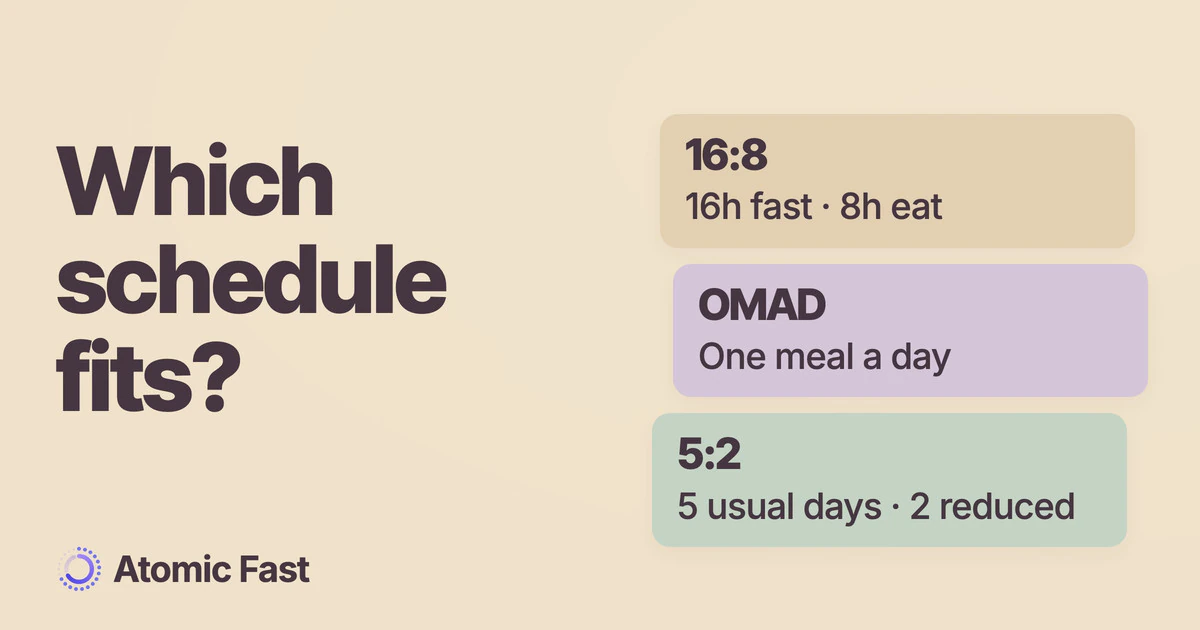
A 12:12 schedule leaves twelve hours for eating and twelve without it. For some adults, that resembles an ordinary overnight interval. It still does not establish that fasting is medically suitable for them.
There is no requirement to progress from 12:12 to 14:10 and then 16:8. The ratios describe hours, not levels you must complete. A wider window, or no formal fasting plan, may be a better fit if meals become rushed or difficult to arrange.
Avoid turning an earlier or later meal into something you need to compensate for. A record is useful information about your day, not a reason to add restriction tomorrow.
Check suitability before setting a target
Johns Hopkins Medicine identifies groups who should not try intermittent fasting, including children and teenagers, people who are pregnant or breastfeeding, those with type 1 diabetes taking insulin, and people with an eating-disorder history.
Other conditions and medicines can also need an individual plan. Ask a clinician or pharmacist before changing meal timing around treatment, particularly medicines affecting glucose or requiring food. Do not move doses to satisfy a timer.
Stop and address symptoms such as faintness or persistent dizziness rather than waiting for a schedule to become easier. A shorter target is not a substitute for investigating why you feel unwell.
Use the timer as a record
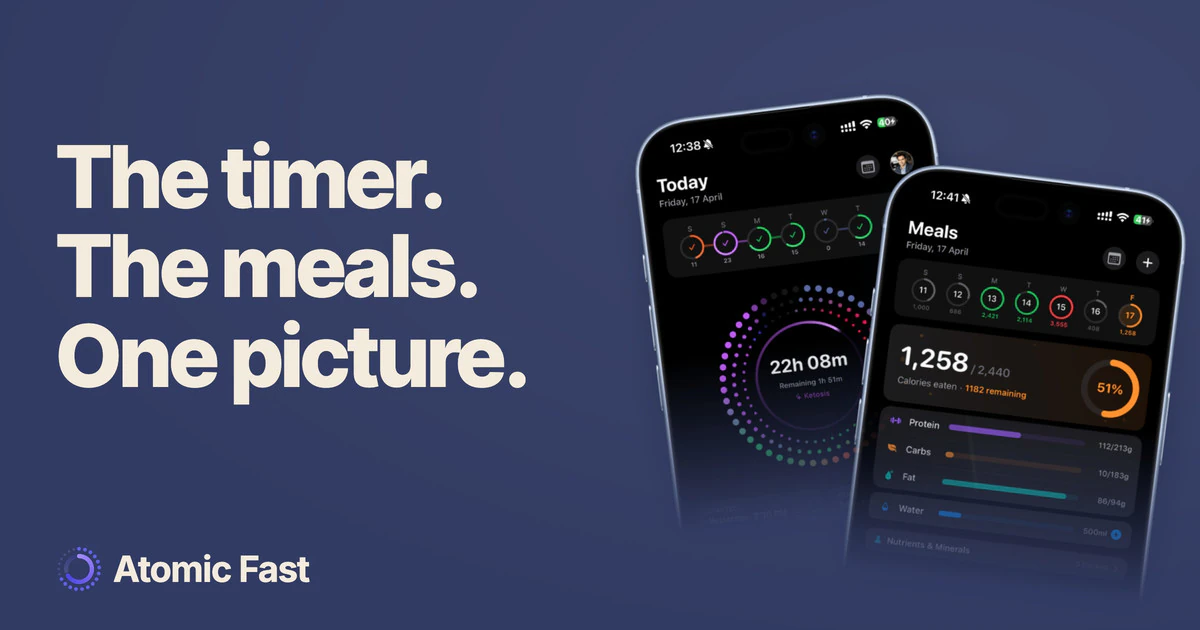
Atomic Fast’s main Start Fast button begins immediately with the displayed goal. More fasting options opens goal and start-time choices, including scheduling up to 24 hours ahead. Choose the plan first, then use the controls to record it.
The phase display uses fixed elapsed-time bands. It cannot confirm ketosis or tell you that continuing a fast is safe. A meal’s digestion-complete estimate is also not a recommended fasting start time.
A useful review question is simple: did this schedule let you eat adequately and get through your day comfortably? If not, revise it or seek advice. Completing more hours is not the only acceptable outcome.
Frequently asked questions
Which window should a beginner choose? There is no universal starting schedule. Consider medical suitability and the meals you need to keep. A wider eating window may be easier to organize without any obligation to narrow it later.
Should I skip breakfast or dinner? Neither is automatically the right choice. Preserve meals needed for medication, nutrition, training or daily life rather than choosing solely from a study headline.
Must the hours be identical every day? An everyday record can accommodate changes. Medical treatment or a clinician-directed plan may have specific timing requirements; follow those rather than a generic flexibility rule.
Can I change a window I already picked? Yes. A schedule that interferes with your health or ordinary meals deserves reassessment. There is no need to compensate with a longer fast.
Which window loses the most weight? The evidence cited here does not establish a universal winner or predict an individual’s result. A timer cannot diagnose why someone’s weight changes or stays the same.
Sources
Sources checked: October 11, 2026.
-
Johns Hopkins Medicine — Intermittent Fasting: What is it, and how does it work? — General precautions and groups advised not to fast.
-
Camacho-Cardenosa et al. (2026) — Early, late and self-selected eating windows — Comparisons with usual care do not establish a direct early-versus-late advantage.
Record the schedule you choose with Atomic Fast. Download on the App Store or Google Play.
This article is for general education and isn’t medical advice. If you’re pregnant or breastfeeding, managing a health condition, taking medication, have a history of disordered eating, or are considering fasts longer than 24 hours, talk to a healthcare professional first.
Try Atomic Fast free
Track your fasts, log your meals, and see how they affect each other, on iPhone and Android.


 Scan to download