Does Intermittent Fasting Lower Blood Pressure?
Does intermittent fasting lower blood pressure? What a 2024 hypertension trial and an 11-trial review found, why weight loss muddies it, and how to test a window safely.
By Nazmul Hasan Rupok Published 12 min read

The cuff at the pharmacy read 134 over 86. Last year’s check-up said “borderline.” Nobody has mentioned pills yet, but someone did mention lifestyle changes, and you’ve already been skipping breakfast for a few weeks. So the obvious question is whether the eating window is doing anything for that number, or whether you should be doing something else entirely.
The short version
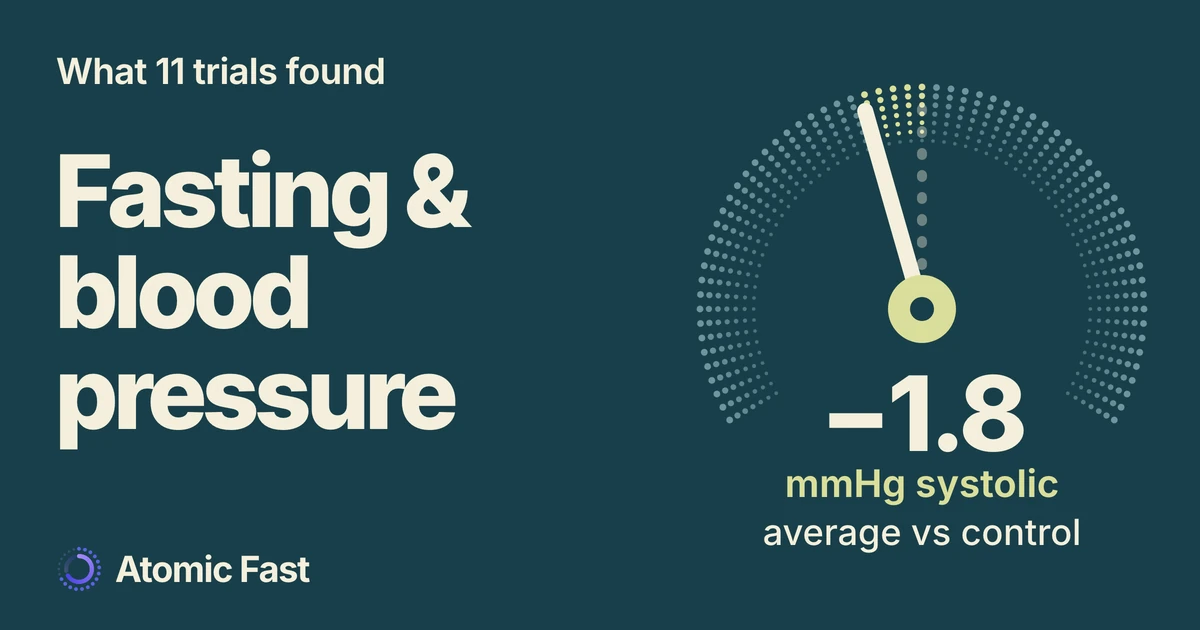
In controlled trials, eating within a 6- to 10-hour window lowered blood pressure by about 2 mmHg on average compared with control groups, according to a 2025 review of 11 trials. An additional drop of roughly 3 to 4 mmHg over six weeks came from a 74-person trial in people with stage 1 hypertension who were also following the DASH diet. Weight also fell in that trial and in the pooled analysis, which can’t separate the contribution of timing from weight loss. Treat an eating window as one possible tool to try with your clinician, not a replacement for the measures with stronger evidence or for any medication you’ve been prescribed.
What the numbers mean before you change anything
Blood pressure is two numbers. The top one, systolic, is the pressure while your heart beats; the bottom one, diastolic, is the pressure between beats. The CDC puts normal below 120 over 80. Elevated is a top number of 120 to 129 with a bottom number under 80. Stage 1 hypertension is 130 to 139 on top or 80 to 89 on the bottom, and stage 2 starts at 140 or 90.
High blood pressure usually causes no symptoms, so you can’t feel whether a change is working. Readings also move around through the day, which is why the CDC notes that clinicians often take several readings over more than one visit and may ask you to check at home with a validated monitor.
That variability matters for this topic. The effects in the fasting research are a few mmHg. Coffee, stress, a full bladder and how you sit can affect a reading. Any conclusion about your own eating window needs repeated readings taken the same way.
The trial that tested an eating window in hypertension
Researchers at Chongqing Medical University in China ran one of the few trials built specifically around high blood pressure (Zhou et al., Nutrition Journal, 2024). They enrolled 74 adults, average age about 48, with newly diagnosed stage 1 hypertension and no high-risk features. People with diabetes, kidney disease, serious heart disease or medications that could affect the results were excluded. Their average BMI was about 24, which is a useful detail: many fasting studies only enroll people with obesity.
Everyone was coached to follow DASH, an eating plan built around vegetables, fruit, whole grains, low-fat dairy, fish, beans and nuts, with limits on sodium, saturated fat and sugary drinks (NHLBI). It was designed and tested for blood pressure in the NHLBI’s own controlled-feeding trials. Half the group also had to eat between 9 a.m. and 5 p.m. and drink only water or calorie-free drinks outside that window. No one was given a calorie target. Participants sent photos of their meals to nutritionists through a messaging app for six weeks.
Blood pressure was the primary outcome, measured each morning by the same researcher with the same automatic cuff, seated, after five minutes of rest, as the average of three readings.
What the trial found
Both groups improved. The DASH-only group’s systolic pressure fell by an average of 5.6 mmHg and diastolic by 5.4 mmHg. The DASH-plus-window group dropped by 8.5 and 9.5 mmHg. By day 42 the groups’ readings differed by 2.9 mmHg systolic and 3.9 mmHg diastolic, and the gap appeared around the third or fourth week.
One six-week trial · 74 adults with stage 1 hypertension
Adding an 8-hour window to DASH
Average fall in morning blood pressure after six weeks. Both groups followed the DASH eating plan; one group also ate only between 9 a.m. and 5 p.m.
Systolic (top number)
DASH alone−5.6 mmHg
DASH + window−8.5 mmHg
Diastolic (bottom number)
DASH alone−5.4 mmHg
DASH + window−9.5 mmHg
Bars show the size of the drop, in mmHg, on the same scale starting at zero.
Weight change complicates the comparison
- DASH alone
- Median weight 61.0 kg before, 60.0 kg after; the within-group change was not statistically significant.
- DASH + window
- Median weight 60.0 kg before, 55.9 kg after; the within-group change was statistically significant.
The eating-window group also lost weight. Median weight went from about 60.0 kg to 55.9 kg, with less fat mass and less body water, while the DASH-only group’s weight did not change significantly. Weight loss can itself lower blood pressure, complicating the timing question.
The authors argue the window did more than that. Blood pressure started separating before weight loss became statistically clear in week five, and the people whose pressure fell most also showed larger drops in extracellular water and higher urinary sodium excretion. They suggest the window might help the body clear sodium. Those are correlations within one group, measured over six weeks, and the control group’s urine was collected only overnight in 20 people. Treat the sodium idea as a hypothesis the trial raised, not one it proved.
There are other limits. The authors note that blinding wasn’t feasible, so participants knew which group they were in. The trial was registered on March 15, 2023, nearly two weeks after recruitment began. Its sample size was planned from the first four patients in each group. The paper reports no confidence intervals for the between-group difference. Its blood-pressure figure lists all 37 people per arm, but only 62 supplied complete meal records, and several body-composition results used smaller samples. And the “improved daily rhythm” result came from extra daytime readings taken only in the window group, with nothing measured between 10 p.m. and 7 a.m.
None of that makes the result wrong. It makes it one small, short, open-label trial whose effect may have been driven partly by eating less.
What 11 trials say when you pool them
A 2025 systematic review asked a narrower question: what happens when people eat in a window without being told to cut calories (Yi et al., Frontiers in Nutrition, 2025). It pooled 11 randomized trials of adults without diabetes, mostly with overweight or obesity, using windows of 6 to 10 hours and lasting from six weeks to a year. The Chongqing trial is one of the 11.
Across the selected comparisons, the windows lowered systolic pressure by 1.79 mmHg (95% CI 0.27 to 3.30 lower) and diastolic by 1.75 mmHg (0.43 to 3.07 lower). Measured between-trial heterogeneity was low; that doesn’t remove the trials’ design limitations. Resting heart rate also fell a little, by about 2 beats per minute, in the four trials that reported it.
11 trials pooled · eating windows of 6 to 10 hours
How far below the control groups?
Each dot is the pooled difference between the eating-window groups and the control groups without an eating window. The line is its 95% confidence interval.
Systolic (top number)
-
All 11 trials
−1.79 mmHg (−3.30 to −0.27)
-
Higher starting systolic (130+)
−2.92 mmHg (−5.64 to −0.21)
-
Lower starting systolic
−1.27 mmHg (−3.10 to 0.56) · crosses zero
Diastolic (bottom number)
-
All 11 trials
−1.75 mmHg (−3.07 to −0.43)
-
Higher starting diastolic (80+)
−2.68 mmHg (−4.83 to −0.53)
-
Lower starting diastolic
−1.21 mmHg (−2.91 to 0.49) · crosses zero
mmHg difference versus control; left of zero means lower blood pressure with the eating window. The tests comparing higher and lower starting groups were not significant (P = 0.32 and 0.29), so the larger subgroup numbers are a signal, not an established difference.
The review also split trials by starting blood pressure. In the two trials where both groups began with an average systolic of 130 or higher, the pooled drop was 2.92 mmHg. In the nine trials with lower starting pressure, it was 1.27 mmHg and not statistically significant. Diastolic followed the same pattern. But the formal tests comparing subgroups were not significant. The high-systolic subgroup contained only 120 people from two trials, including Chongqing. This doesn’t establish that fasting works better at higher starting pressures, or that it does nothing at lower pressures.
The authors themselves flag the biggest confounder. Although no trial prescribed fewer calories, BMI fell in the eating-window groups, which suggests people ate less without being told to. Weight loss, they write, “must be recognized as a potential confounder.” Eight of the 11 trials were rated as having some concerns for bias and three as high risk, mostly because people didn’t stick to the window. There are reporting problems too: the abstract counts 653 participants, while the blood-pressure analyses list 719. The review says special diets were excluded, yet includes the DASH trial. That makes its description of every control group as unrestricted usual eating misleading.
How much to trust this
The pooled estimate is modest: a couple of mmHg alongside weight loss. It doesn’t establish who benefits most.
What the research can’t tell you yet:
- How much timing matters by itself. These pooled estimates don’t isolate a weight-independent effect. That is different from saying no such effect exists.
- Whether it lasts. Most trials ran 6 to 12 weeks. Hypertension is a long-term condition, and a six-week change says little about year two.
- Whether it changes outcomes that matter most. None of these trials measured heart attacks, strokes or deaths. The separate debate over an 8-hour eating window and heart deaths rests on observational survey data, which can’t settle the question either way.
- Whether it’s better than other approaches. The review selected eating-window versus non-window comparisons. It wasn’t a pooled head-to-head test against calorie restriction, exercise or sodium reduction; some included studies had other arms that weren’t used.
A separate controlled-feeding experiment by Sutton et al. (2018) helps explain the first point. Eight men with prediabetes completed both five-week schedules: a six-hour window ending by mid-afternoon and a 12-hour window. Researchers provided matched meals and adjusted calories to maintain weight. Morning blood pressure was lower with the early window, while weight changes were similar between schedules. This supports a possible timing-specific effect, but blood pressure was a secondary outcome in a tiny, men-only experiment, measured only in the morning. It doesn’t establish a reliable benefit for routine hypertension care.
For everyday decisions, the comparison with established care matters more. Other lifestyle measures for blood pressure already have a strong evidence base. The CDC lists regular physical activity, not smoking, limiting sodium and alcohol, a healthy weight and managing stress. In the Chongqing trial, the DASH-only group’s readings also fell by 5.6 mmHg. With no group left on a usual diet, the trial can’t say how much of that was DASH itself, but DASH has earlier controlled-feeding evidence behind it, and the window added less on top.
Who should be careful
If you take blood-pressure medication, don’t adjust it, skip it or change when you take it because you’ve started an eating window. Talk to whoever prescribes it first. Some medicines are meant to be taken with food or at a set time of day, and a window can change both when you eat and how much you drink.
Lightheadedness is the symptom to watch. Keep drinking water during an ordinary eating-window fast; the trials weren’t dry fasts. If you feel lightheaded, our guide to feeling dizzy while fasting covers the common causes and when to get help. If your home readings drop well below what your clinician expects, or you feel faint, stop and get advice.
Very high readings are a different situation. For nonpregnant adults, the American Heart Association advises urgent action for readings over 180 systolic or over 120 diastolic. With chest pain, breathlessness, back pain, numbness, weakness, vision changes or difficulty speaking, call emergency services immediately. Without symptoms, wait at least a minute and repeat the reading; if it remains that high, contact a clinician as soon as possible. An eating window has no role there.
The hypertension trial excluded diabetes, chronic kidney disease and serious cardiovascular disease; the review excluded diabetes. If that’s you, the results may not apply, and the plan needs your care team.
What to do with this
- Start with the basics that have the strongest evidence. Sodium, activity, alcohol and weight have more support than meal timing. A window can sit alongside them, not replace them.
- Pick a window you can hold. The trials used 6 to 10 hours, and the Chongqing window ran from 9 a.m. to 5 p.m. Choose a sustainable schedule with your clinician rather than assuming a shorter window is better. If you’re not sure where to begin, here’s how to choose a window that fits your days.
- Keep the food the same quality, or better. Both groups in the Chongqing trial ate DASH-style meals, and the window was tested on top of that. A window filled with salty takeaway isn’t the same experiment.
- Measure properly. Use a validated upper-arm cuff and follow the CDC’s measurement guidance: rest seated for five minutes, support your back and arm, keep your feet flat, and take at least two readings one or two minutes apart. Measure at consistent times and share the log with your clinician.
- Track your timing alongside the readings. Atomic Fast’s timer records when each fast starts and ends, and the optional food log keeps a record of what you ate. The app doesn’t measure blood pressure, so keep your cuff readings separately and look at the two side by side.
Frequently asked questions
How much can intermittent fasting lower blood pressure? In the pooled review, by about 2 mmHg on average compared with control groups. One small trial in people with stage 1 hypertension found an extra 3 to 4 mmHg when a window was added to DASH. Individual results vary, and these estimates don’t isolate the contribution of weight loss.
Is 16:8 good for high blood pressure? The trials tested windows of 6 to 10 hours, so a 16:8 schedule sits within that range. They showed small average drops over a few weeks. That supports trying it with your clinician’s agreement, not using it instead of treatment.
Can I stop my blood pressure medication if I fast? No. None of these trials tested stopping medication, and the hypertension trial excluded people taking medicines that could affect its results. Any change to your medication needs your prescriber.
Does it matter when my eating window is? The Chongqing trial used 9 a.m. to 5 p.m. Some studies in the review had several timing arms, but the reviewers selected just one per study, often the self-selected schedule. The pooled result therefore doesn’t rank early versus late windows for blood pressure. Discuss timing around your meals and medicines with your clinician.
How long before I’d see a difference? In the Chongqing trial, the gap between groups appeared around three to four weeks. Look for a pattern in consistent home readings rather than judging a few days. Don’t wait several weeks to report concerning readings or symptoms.
Sources
Sources checked: October 21, 2026.
-
Zhou X et al. (2024), Effects of DASH diet with or without time-restricted eating in the management of stage 1 primary hypertension: a randomized controlled trial, Nutrition Journal 23:65 — PMID 38886740, DOI 10.1186/s12937-024-00967-9, ChiCTR2300069393. Full text and tables reviewed. Supports the blood-pressure results in 74 adults over six weeks; body-composition samples varied and were smaller for several outcomes. Unblinded, single-center, registered after recruitment began, no confidence intervals for between-group differences; weight loss in the window group confounds the comparison.
-
Yi X et al. (2025), Effects of time-restricted eating without caloric restriction on blood pressure and cardiometabolic profile in non-diabetic adults: a systematic review and meta-analysis of randomized controlled trials, Frontiers in Nutrition 12:1631477 — PMID 41346676, PROSPERO CRD420251052403. Full text reviewed. Supports the pooled systolic, diastolic and heart-rate estimates and subgroup results. Mostly short trials with some-concern or high bias ratings; BMI fell, so timing is not isolated. Participant totals and claims about excluding special diets are inconsistent with its own analyses and included DASH trial.
-
Centers for Disease Control and Prevention, About High Blood Pressure — Page last reviewed October 13, 2026. Supports the blood-pressure categories, home monitoring and lifestyle measures listed. General guidance, not study data.
-
National Heart, Lung, and Blood Institute, DASH Eating Plan — Page last updated February 25, 2026. Supports the description of foods emphasized and limited, and the sodium targets. Patient guidance.
-
National Heart, Lung, and Blood Institute, Health Benefits of DASH — Page last updated February 25, 2026. Describes the DASH and DASH-Sodium controlled-feeding trials and their blood-pressure findings in general terms; it gives no mmHg values.
-
Sutton EF et al. (2018), Early Time-Restricted Feeding Improves Insulin Sensitivity, Blood Pressure, and Oxidative Stress Even without Weight Loss in Men with Prediabetes, Cell Metabolism — PMID 29754952, DOI 10.1016/j.cmet.2018.04.010. Full-text methods and results reviewed. Matched feeding with eight completers supports a possible timing-specific effect; blood pressure was secondary and measured only in the morning. Not a large hypertension treatment trial.
-
CDC, Measuring Your Blood Pressure — Supports resting position, repeated measurements and factors that distort readings. Practical guidance, not evidence that fasting treats hypertension.
-
American Heart Association, When To Call 911 About High Blood Pressure — Supports urgent action for very high readings in nonpregnant adults and emergency symptoms. Local emergency numbers vary.
Product notes: the timer and optional food log were checked against Atomic Fast’s current product capability reference. This was not a runtime test, and the app has no blood-pressure feature.
Atomic Fast is a free fasting timer with an optional food log. Download it on the App Store or Google Play.
This article is for general education and isn’t medical advice. If you’re pregnant, managing a health condition, taking medication, have a history of disordered eating, or are considering fasts longer than 24 hours, talk to a healthcare professional first.
Try Atomic Fast free
Track your fasts, log your meals, and see how they affect each other, on iPhone and Android.


 Scan to download