Does Intermittent Fasting Reduce Inflammation?
Fasting trials show small, inconsistent drops in CRP and TNF-alpha, and a year-long trial found no clear change. What the inflammation evidence shows, and what moves CRP.
By Nazmul Hasan Rupok Published 12 min read

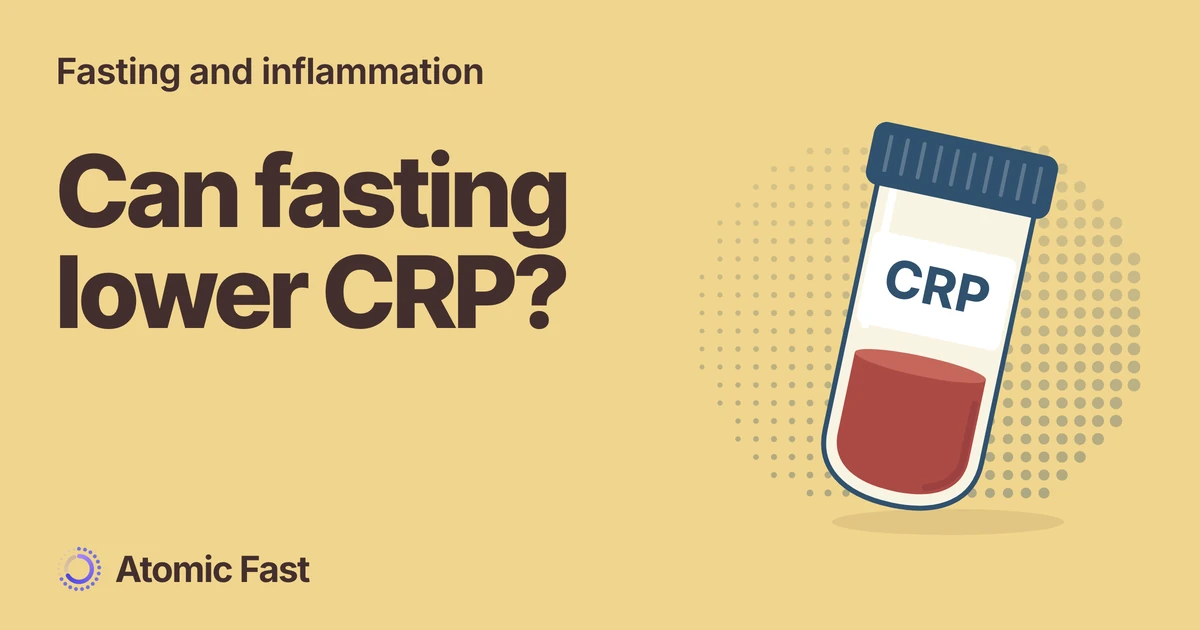
“Anti-inflammatory” is one of the most repeated claims about intermittent fasting. It shows up next to autophagy, longevity and joint pain, usually without a number attached. So suppose your doctor ordered a high-sensitivity CRP test and it came back at 3.4 mg/L. Would eating between noon and 8 p.m. bring it down? The trials do not give a reliable forecast for that hypothetical result.
The short version
Fasting trials show small, inconsistent changes in blood markers of inflammation. Two reviews found lower TNF-alpha, but their CRP results differed and neither found a clear IL-6 change. These comparisons do not establish a benefit from fasting hours independent of weight loss. A 12-month trial with an eight-hour eating window followed by a ten-hour maintenance window found no clear marker differences from controls, despite weight loss. Its uncertainty leaves room for benefit or no benefit, so a raised CRP needs interpretation with your clinician rather than a promise about the clock.
What “inflammation” means on a blood test
Inflammation is the body’s repair and defense response. A cut that turns red and swollen is acute inflammation doing its job. The kind linked to fasting claims is different: a low, persistent signal, often called low-grade or chronic inflammation, that tends to run higher in people with obesity, insulin resistance and some long-term conditions.
Symptoms alone cannot measure it, and no single test captures the whole response. Trials usually measure a handful of blood markers:
- C-reactive protein (CRP): made by the liver in response to inflammation. A standard test picks up big rises during infections. A high-sensitivity (hs-CRP) test detects smaller amounts and can help assess cardiovascular risk.
- Interleukin-6 (IL-6): a signaling molecule (cytokine) that, among other jobs, prompts the liver to make CRP.
- TNF-alpha: another cytokine, produced by immune cells and also by fat tissue.
These numbers are noisy. MedlinePlus lists infections, autoimmune disease, smoking, poor sleep, depression, obesity and menopausal hormone therapy among the things linked to higher CRP. It also notes that medicines such as ibuprofen and aspirin can affect results, and that a CRP result shows how much inflammation is present but not its cause or location. A recent cold can raise CRP too, which is one reason a single result is hard to read.
An hs-CRP result can be one input to heart-risk decisions. The 2019 ACC/AHA primary prevention guideline lists an hs-CRP of 2.0 mg/L or higher, if it has been measured, as a “risk-enhancing factor” that can help guide decisions for adults whose 10-year heart risk is borderline or intermediate. It is a nudge in a risk conversation, not a diagnosis.
What the pooled trials found
Two recent meta-analyses ask the question most directly.
The broader one, by Mousa Khalafi and colleagues in Nutrients (2025), searched to June 2024 and pooled 21 studies (19 randomized and two non-randomized) with 839 adults. It included daily eating windows, alternate-day fasting and one 5:2 trial, each compared with a control group that didn’t change how it ate. Ramadan studies were excluded. Most interventions lasted under 12 weeks. Against those controls, the pooled estimates were:
- TNF-alpha: standardized difference −0.31 (95% CI −0.55 to −0.07).
- CRP: −0.19 (−0.39 to −0.00), with the upper limit rounded to −0.00; the reported p-value was 0.04.
- IL-6: no clear change, −0.13 (−0.41 to 0.15).
The narrower review, by Turner and colleagues in the American Journal of Clinical Nutrition (2024), looked only at time-restricted eating such as 16:8. I could read only its abstract. It pooled 25 studies (13 randomized) with 936 adults. TNF-alpha came down (−0.25, CI −0.47 to −0.03), while CRP (−0.11, −0.33 to 0.12) and IL-6 (−0.09, −0.39 to 0.21) did not clearly change.
A standardized difference puts results on a common scale relative to the variation measured in studies. It is not a percentage or a change in mg/L. Around 0.2 is conventionally called small, but that label does not tell us whether someone will feel better or avoid illness. These reviews should not be counted as two independent sets of participants.
Two reviews · fasting compared with no diet change
Which markers moved?
Each dot is a pooled standardized difference; the line is its 95% confidence interval. Left of zero means lower levels with fasting. A difference of about 0.2 is conventionally called small.
CRP C-reactive protein, made by the liver
-
All fasting styles
−0.19 (−0.39 to −0.00) · upper limit rounded; p = 0.04
-
Eating windows only
−0.11 (−0.33 to +0.12) · crosses zero
TNF-alpha Cytokine from immune cells and fat tissue
-
All fasting styles
−0.31 (−0.55 to −0.07)
-
Eating windows only
−0.25 (−0.47 to −0.03)
IL-6 Cytokine that prompts CRP production
-
All fasting styles
−0.13 (−0.41 to +0.15) · crosses zero
-
Eating windows only
−0.09 (−0.39 to +0.21) · crosses zero
These are pooled comparisons, not a forecast for one person. Khalafi’s review could not separate fasting effects from weight loss. Its CRP upper limit rounds to −0.00; the reported p-value is 0.04.
An older, broader analysis found a different pattern. Wang and colleagues (2020, Nutrition; abstract only) combined 18 randomized trials of fasting and other energy-restricted diets. Its pooled CRP estimate was 0.24 mg/L lower (95% CI 0.05 to 0.44 lower), with no clear TNF-alpha or IL-6 change. The CRP result combines different energy-restricted diets; it is not an estimate of a fasting-only effect.
The year-long trial that found no clear change
The University of Illinois Chicago trial followed 90 adults with obesity, mostly Black and Hispanic women, for a year. For the first six months, one group ate between noon and 8 p.m. without counting calories, a second aimed to cut calories by 25% daily, and controls kept their usual eating habits. In the maintenance phase, the window widened to 10 a.m. to 8 p.m., while the calorie group switched to its recalculated weight-maintenance needs. Both intervention groups received dietary counseling.
A 2025 secondary analysis led by Shuhao Lin measured CRP, IL-6 and TNF-alpha at baseline and month 12. Seventy-seven people completed the year; the intention-to-treat analysis included all 90 randomized participants. Each intervention group lost about 4% of its own starting weight. Compared with the change in controls, the weight differences were 4.6 kg lower for the eating-window group and 5.4 kg lower for the calorie-target group. Those comparisons are different from the groups’ own weight loss.
None of the three markers showed a statistically significant difference in change versus controls. For CRP, the eating-window estimate was 0.11 mg/L lower, with a 95% confidence interval from 1.00 mg/L lower to 0.77 mg/L higher. The calorie-target estimate was 0.35 mg/L lower (1.14 lower to 0.43 higher).
12-month trial · each diet compared with controls
Weight fell. CRP did not clearly follow.
Differences in change from baseline versus controls at month 12, with 95% confidence intervals. The two panels use different units and scales. Average starting CRP was about 3.3 to 3.6 mg/L in each group.
Body weight difference from controls, kg
-
Eating-window group
−4.61 kg (−7.37 to −1.85)
-
Calorie-target group
−5.42 kg (−9.13 to −1.71)
CRP difference from controls, mg/L
-
Eating-window group
−0.11 mg/L (−1.00 to +0.77) · crosses zero
-
Calorie-target group
−0.35 mg/L (−1.14 to +0.43) · crosses zero
The trial was sized to detect weight differences, not inflammation markers. A CRP interval this wide fits a drop of up to about 1 mg/L, no change, or a small rise. IL‑6 and TNF‑alpha also showed no significant difference from controls.
That wide interval is the real headline. The trial was sized to detect differences in weight, not in inflammation markers, and the authors say so. A null result here means “not detected,” not “proven to do nothing.” A drop of 0.5 mg/L sits comfortably inside what the data allow, and so does a small rise.
One pattern did appear when the authors looked at all 90 participants together. People whose weight, visceral fat and insulin resistance fell more tended to see CRP fall more. The correlations were modest (r = 0.25 to 0.32). These were exploratory secondary analyses without adjustment for multiple comparisons. They show association, not that weight loss caused the CRP change or explained all of it.
Why weight keeps coming up
Fat tissue is itself a source of inflammatory signals, as both research teams describe in their background sections. When people lose weight, CRP tends to come down. A systematic review by Elizabeth Selvin and colleagues (2007, Archives of Internal Medicine; abstract only) pooled 33 weight-loss studies. Across surgical and lifestyle programs together, each kilogram lost went with about 0.13 mg/L lower CRP on average. The relationship was much weaker in the lifestyle programs alone, so that figure doesn’t translate into a personal forecast.
The fasting trials fit this. Khalafi’s team states that their data couldn’t separate effects of fasting from effects of weight loss and energy balance. The year-long trial also cannot isolate a timing effect: eating habits, energy intake and weight changed together, and both intervention groups received counseling.
Weight change is a plausible contributor to marker changes, but these studies do not establish how much comes from weight loss, dietary changes or timing itself. They also do not supply a personal weight-loss threshold for lowering CRP.
What the evidence doesn’t settle
- Most trials were short and small. Most ran 12 weeks or less with a few dozen people. Inflammation markers vary from day to day, so small trials struggle to detect modest changes.
- The comparisons differ. Most pooled trials compared fasting with doing nothing. The year-long trial compared it with ordinary calorie cutting and did not detect marker differences between the diets. That does not establish equivalence.
- Populations were mixed. The reviews combined lean young men, adults with obesity, and people with fatty liver or kidney disease. People who start with higher CRP may have more room to change.
- The year-long analysis had other limits. It measured markers at only two time points, included mostly women and did not monitor anti-inflammatory supplement use. Blood measurements also do not capture inflammation within particular tissues.
- Blood markers aren’t clinical outcomes. The results discussed here concern lab values, not fewer heart attacks, strokes or joint symptoms. A small drop in a marker doesn’t establish that the risk it tracks has fallen.
- Lab and cell studies run ahead of people. Animal and cell research on fasting and immune pathways is active, but it doesn’t tell you what a 16:8 schedule does to your blood test.
What to do with this
- Treat CRP as a clue, not a target. A raised result has many possible causes. Ask your clinician what they think is behind yours before choosing a diet to fix it. A CRP that is high because of an infection or an inflammatory condition needs that addressed.
- Use the window as an eating structure. If a fixed window helps you manage meals, it may be a workable approach. Weight change could contribute to CRP changes, but neither a window nor a particular amount of weight loss guarantees a lower result. Our look at whether 16:8 works without changing what you eat covers the weight-loss question in more detail.
- Give the result context. Ask whether a repeat test is useful. Tell the clinician about recent illness, medicines and supplements that could affect the result. Do not stop prescribed medicines to prepare for a test without their advice.
- Keep the broader picture in view. MedlinePlus links smoking and poor sleep to higher CRP. Your clinician can help address relevant causes and cardiovascular risk rather than chasing one number. For another marker with its own evidence, see LDL cholesterol on an eating window.
- Know what the app can tell you. Atomic Fast’s timer applies fixed phase labels by elapsed hours; those labels do not measure inflammation. The app saves the fasts and meals you log. That record can provide context for a conversation about your routine, but it cannot explain a blood-test change.
If you’re weighing a fasting schedule against plain calorie cutting for weight loss, our comparison of intermittent fasting and calorie counting is a useful companion to this piece.
Frequently asked questions
Does intermittent fasting lower CRP? The results differ between reviews. One 2025 review found a small CRP drop just at the edge of statistical significance, while a 2024 review limited to time-restricted eating found no clear change. A 12-month trial in adults with obesity found no clear CRP difference versus controls, with an interval too wide to rule out a small effect either way.
Is 16:8 anti-inflammatory? Time-restricted eating lowered TNF-alpha slightly in pooled studies, while CRP and IL-6 results were less consistent. These comparisons do not establish an effect of fasting hours independent of changes in weight and diet. They also do not show that a marker change improves symptoms.
How much weight loss does it take to lower CRP? These studies do not establish a fixed threshold for one person. Across weight-loss studies, more weight lost was associated with lower CRP, but the relationship varied between programs. Those group patterns are not a personal target or a reason to keep losing weight until a test changes.
Can fasting help autoimmune or joint inflammation? This article doesn’t answer that. The evidence discussed here does not establish treatment benefits for those conditions. If you have rheumatoid arthritis, inflammatory bowel disease or another inflammatory condition, talk to your specialist before changing how you eat, especially if your medicines need to be taken with food.
Should I fast before a CRP test? MedlinePlus’s preparation advice for a CRP test is about medicines, not fasting, but CRP is often ordered alongside tests that may need it. Follow the instructions from whoever ordered your tests, and mention recent illness and medicines such as ibuprofen or aspirin.
Sources
Sources checked: November 23, 2026.
- Khalafi M, Habibi Maleki A, Mojtahedi S, et al. (2025), The Effects of Intermittent Fasting on Inflammatory Markers in Adults: A Systematic Review and Pairwise and Network Meta-Analyses. Nutrients 17(15):2388 — Central source; full text read. 21 studies (19 randomized), 839 adults, mostly under 12 weeks, fasting versus no-change controls. Supports the pooled CRP, TNF-alpha and IL-6 estimates. The authors state they couldn’t separate fasting from weight-loss effects. No correction or retraction alert was found in the publication metadata checked.
- Turner L, Charrouf R, Martínez-Vizcaíno V, et al. (2024), The effects of time-restricted eating versus habitual diet on inflammatory cytokines and adipokines in the general adult population: a systematic review with meta-analysis. American Journal of Clinical Nutrition 119(1):206–220 — Abstract only. 25 studies (13 randomized, 12 non-randomized), 936 adults, time-restricted eating only. Supports the TRE-specific estimates; full methods and study-level data were not independently checked.
- Lin S, Cienfuegos S, Ezpeleta M, et al. (2025), Time-Restricted Eating Versus Daily Calorie Restriction: Effects on Inflammatory Markers over 12 Months in Adults with Obesity. Nutrients 17(7):1130 — Central source; full text read. Secondary analysis of a 90-person randomized trial; differences in change at month 12 and exploratory correlation analyses; 77 completed, all 90 included in the intention-to-treat model. Not powered for inflammation markers; about 80% women; markers measured only at baseline and month 12.
- Wang X, Yang Q, Liao Q, et al. (2020), Effects of intermittent fasting diets on plasma concentrations of inflammatory biomarkers: A systematic review and meta-analysis of randomized controlled trials. Nutrition 79–80:110974 — Abstract only. 18 trials of fasting and energy-restricted diets; supports the average CRP drop of about 0.024 mg/dL (0.24 mg/L). Older search, to June 2019.
- Selvin E, Paynter NP, Erlinger TP (2007), The effect of weight loss on C-reactive protein: a systematic review. Archives of Internal Medicine 167(1):31–39 — Abstract only. 33 weight-loss studies; about 0.13 mg/L lower CRP per kg lost across surgical and lifestyle arms, weaker in lifestyle arms alone. A between-study association, not an individual prediction.
- Arnett DK, Blumenthal RS, Albert MA, et al. (2019), 2019 ACC/AHA Guideline on the Primary Prevention of Cardiovascular Disease: Executive Summary. Journal of the American College of Cardiology 74(10):1376–1414 — Corrected PMC text, Table 2; the page links two correction notices. Supports hs-CRP ≥2.0 mg/L as a risk-enhancing factor, if measured, for adults at borderline or intermediate risk. Not a recommendation to test everyone.
- MedlinePlus (US National Library of Medicine), C-Reactive Protein (CRP) Test — What CRP reflects, conditions and medicines that affect it, and the difference between CRP and hs-CRP tests. General information, not individual advice.
Product information checked: November 23, 2026. The timer’s fixed elapsed-time phase labels and saved fasting and meal records were checked against current iOS and Android source code and product documentation. The app does not measure inflammation markers. No device walkthrough was performed.
Keep a clear record of your eating window and meals with Atomic Fast, free on the App Store and Google Play.
This article is for general education and isn’t medical advice. If you’re pregnant, managing a health condition, taking medication, have a history of disordered eating, or are considering fasts longer than 24 hours, talk to a healthcare professional first.
Try Atomic Fast free
Track your fasts, log your meals, and see how they affect each other, on iPhone and Android.


 Scan to download