Cortisol Belly: Stress, Insulin, and the Breakfast Question
How stress and cortisol relate to belly fat and insulin sensitivity, what fasting can help with, and why skipping breakfast is not a proven way to lower cortisol.
By Nazmul Hasan Rupok Published 11 min read

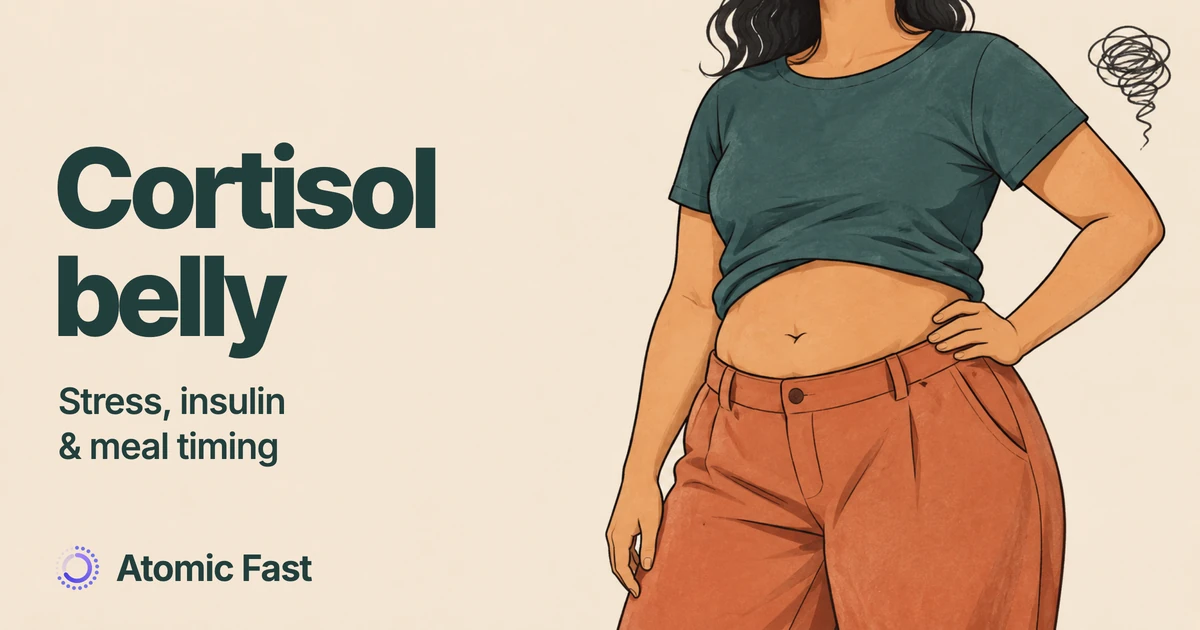
Your clothes feel tighter around the middle. Sleep has been patchy, work follows you home, and meals happen whenever there is a gap. Then you encounter the phrase “cortisol belly,” and a complicated few months suddenly seem to have one explanation.
The appeal is understandable. It acknowledges that stress reaches the body. But it also invites a tempting leap: lower one hormone, perhaps by skipping breakfast, and the belly will follow.
That leap deserves a closer look. The useful question is how to make your daily routine support your metabolism without giving you another demanding rule to live by.
The short version
Cortisol excess can interfere with insulin action, and stress can affect the sleep, eating and activity patterns that influence metabolic health. Abdominal fat alone cannot tell you whether your cortisol is high. Fasting can help some people manage food intake and improve metabolic markers, but those benefits do not establish that it lowers cortisol or selectively removes belly fat. Skipping breakfast is an optional scheduling choice, not a proven cortisol treatment.
“Cortisol belly” is a description, not a diagnosis
Fat beneath the skin is called subcutaneous fat. Visceral fat sits deeper, around abdominal organs. A visible belly can contain both; its appearance cannot tell you exactly how much visceral fat you have, let alone which hormone caused it.
Clinicians do recognize a condition involving prolonged cortisol excess: Cushing’s syndrome. It can cause central weight gain and problems with blood sugar, including insulin resistance. Glucocorticoid medicines can also produce this syndrome. That clinical picture is different from assuming a stressful month has caused a hormonal disorder. NIDDK’s Cushing’s guidance explains the distinction.
Body shape is a starting point for a conversation, not a laboratory result. Calling every expanding waist “cortisol belly” can hide other relevant factors and turn normal fluctuations in stress into something to fear.
Stress reaches your metabolism through several routes
Cortisol helps make energy available and supports normal blood pressure and glucose regulation. It also follows a daily rhythm, generally higher around the start of the waking day and lower toward the night. That rhythm is part of the rationale for the meal-timing research discussed below. The goal is healthy regulation, not the lowest possible cortisol reading.
There is a real research trail behind the stress-and-waist connection. In a study of 59 premenopausal women, participants with a higher waist-to-hip ratio showed greater cortisol responses to the first laboratory stress session. Some also continued reacting more strongly to repeated challenges. This was an association measured in women with existing differences in body shape. It did not show stress creating new abdominal fat over time.
Daily life adds other routes. Stress may mean disrupted sleep, more comfort eating, or less opportunity to move. The NHLBI identifies overeating and drinking alcohol among potentially unhealthy coping responses. None of this requires a person to have continuously elevated cortisol.
Think about the whole evening: unfinished work, a late meal, another drink, a delayed bedtime. Focusing only on a hormone number leaves much of that pattern untouched. It can also put responsibility on someone to “calm down” when the real problem is an unmanageable workload or too little support.
Cortisol excess can make insulin less effective
Insulin helps regulate how your body handles glucose. When tissues respond less effectively to it, the pancreas may need to produce more insulin to keep blood glucose controlled. If that compensation becomes insufficient, glucose rises. This is the core problem described in NIDDK’s insulin-resistance guidance.
Cortisol excess can interfere on both sides of the equation: the liver’s glucose output becomes harder for insulin to suppress, while the body clears glucose less effectively. A controlled hydrocortisone experiment in nine people demonstrated these effects. The drug exposure produced substantial cortisol excess; it does not tell us the size of the effect from your commute or an argument.
This helps explain why cortisol is relevant to blood sugar without making it the cause of every glucose problem. Insulin resistance has multiple contributors, including excess abdominal fat and physical inactivity. Stress can be part of the picture without explaining all of it.
Another distinction matters when discussing fasting: a lower insulin level is not automatically better insulin sensitivity. Insulin can fall because you have not eaten. Sensitivity concerns how effectively insulin works, which requires more context than a single fasting value.
How the effects can connect
Several routes to metabolic strain.
Cortisol excess and the daily effects of stress are related questions. They are not interchangeable.
Cortisol excess
Human experiments show impaired insulin action.
Glucose regulation
Insulin has less effect on glucose clearance and on suppressing the liver’s glucose output.
Evidence from substantial hormone exposure, not a prediction about a stressful day.
Daily stress
Sleep and coping patterns can change.
Everyday habits
Eating, drinking and opportunities for movement may shift. Responses differ between people.
These changes can matter without continuously high cortisol.
Waist size alone cannot tell you which factors are involved.
Make stress management practical enough to use
Start with a problem you can name. “Reduce stress” is vague. “Stop answering work messages during dinner” is a change you can discuss and attempt. If caregiving, money or work is driving the strain, support and practical adjustments belong in the plan alongside relaxation exercises.
Protect sleep opportunity. Most working-age adults need at least seven hours. A consistent bedtime and waking time, a calmer bedroom, and avoiding afternoon or evening caffeine are reasonable starting points from the CDC. Persistent sleep problems deserve attention, especially if an eating schedule is making them worse.
Sleep also matters independently of a cortisol story. In a small randomized crossover trial, nine postmenopausal women were analyzed after normal sleep and four nights of restricted sleep opportunity. Insulin sensitivity worsened during restriction. The population was small and specific, but the experiment gives a concrete reason to treat sleep as part of metabolic care.
Choose movement you can recover from. A walk you enjoy and regular, manageable activity may be easier to sustain during a difficult week than adding punishing workouts. Physical activity and social support both appear in the NHLBI’s stress-management guidance. You do not need to finish every session exhausted for it to count.
Try a short daily pause. Comfortable slow breathing, a brief meditation, or a quiet walk can create a repeatable break. A one-month randomized study found benefits for mood and respiratory rate from brief breathing practices, with encouraging results for an exhalation-focused method. It did not establish that breathing exercises lower belly fat.
Persistent anxiety or feeling unable to cope is a reason to seek professional support. Stress management should make life more manageable; it should not become another performance test.
Fasting can help without being a cortisol treatment
A daily eating window can simplify meal decisions and reduce opportunities for unplanned eating. If it helps someone maintain an appropriate energy intake, weight loss may improve metabolic health. That is a plausible practical benefit, not evidence that fasting targets a special category of stress fat.
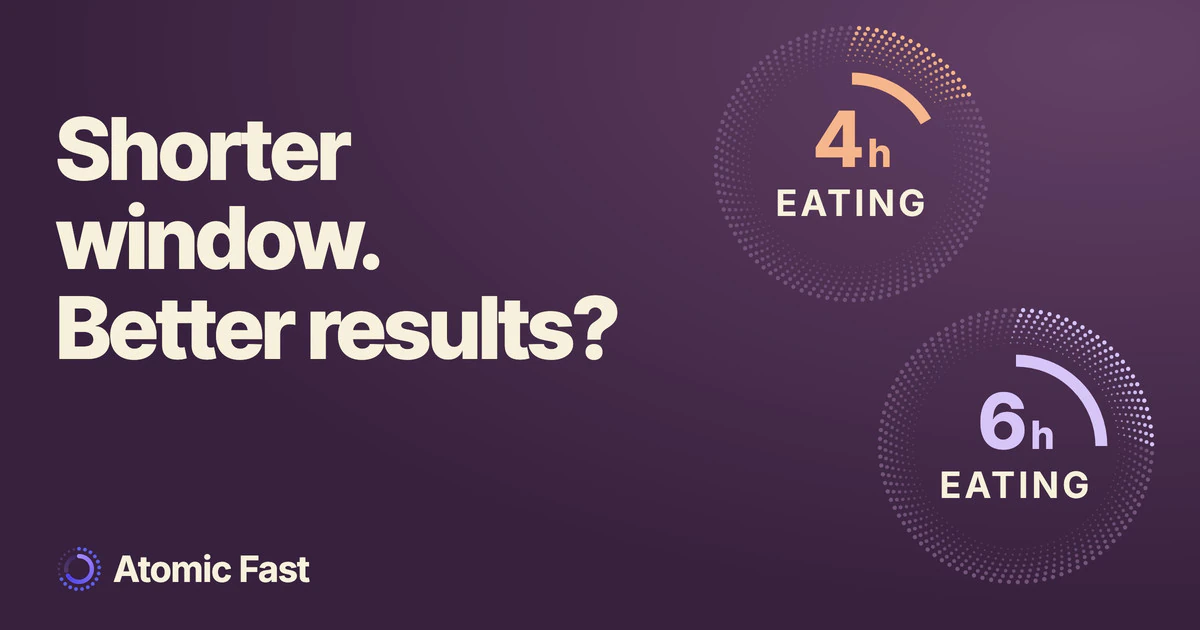
Timing may also matter beyond weight. In a 2018 controlled feeding trial, eight men with prediabetes completed an early six-hour eating schedule and a twelve-hour control schedule, each for five weeks. Food was provided to maintain weight. The early schedule improved measures of insulin sensitivity, but morning cortisol did not change significantly. Its last meal was before 3 pm, and breakfast stayed in the schedule.
A separate four-day trial in eleven adults compared eating from 8 am to 2 pm with 8 am to 8 pm. Evening cortisol was lower with the early window; the apparent morning increase was not statistically significant. Two sampling times and four days of eating cannot establish a lasting hormonal “reset.”
Nor is fasting a demonstrated shortcut to selectively losing visceral fat. A 2025 trial of 197 adults compared early, late and self-selected eight-hour windows, each added to Mediterranean-diet education, with that education alone. After twelve weeks, researchers found no significant additional reduction in MRI-measured visceral fat from the eating windows. That result does not prove the approaches equivalent. It does weaken the promise of a uniquely belly-targeted benefit.
Should you skip breakfast?
You can extend an overnight fast by delaying your first meal, finishing your last meal earlier, or adjusting both. These choices produce different daily schedules even when the fasting duration is identical. Our guide to early versus late eating windows explores that distinction.
The direct breakfast-and-cortisol evidence gives no basis for prescribing breakfast omission. A study of 65 women compared habitual breakfast skippers with breakfast eaters. Skippers had a smaller daily cortisol variation and, during one study condition, higher daytime cortisol. Their breakfast habits were not randomly assigned, so the study cannot establish that skipping caused the differences. Body composition and an estimate of insulin resistance, HOMA-IR, did not differ significantly.
The right conclusion is narrower than either “breakfast fixes cortisol” or “skip breakfast to fix cortisol.” Neither claim follows from this evidence. The early-feeding trials also show that fasting research cannot be treated as research specifically supporting breakfast omission.
Skipping can still be convenient if you are comfortable without a morning meal and can eat adequately later. Keeping breakfast may fit better if you wake hungry, train early, need food with medication, or find that delaying food leaves you preoccupied with eating. Judge the schedule by the whole day it creates. Our breakfast evidence review separates the weight-loss question from other health outcomes.
Timing and duration
The same fast. Different hours.
Each example has an 8-hour eating window and a 16-hour overnight fast. Moving the window changes which meals fit.
An earlier window
8 am–4 pm
Includes breakfast; finishes in the afternoon.
A later window
Noon–8 pm
Delays the first meal; includes an evening meal.
Fasting does not require skipping breakfast. The schedule still needs to fit your health and your day.
What the evidence does not settle
The studies above ask different questions. Giving hydrocortisone tests cortisol excess. Comparing habitual breakfast eaters tests an association. Providing meals at specified times tests a schedule. Combining them into “stress raises cortisol, therefore skipping breakfast removes belly fat” introduces conclusions that none of them tested.
The small feeding studies also used unusually early finishing times and short follow-up. They cannot tell every reader which window to choose. Feeling calmer, sleeping better, losing weight and changing a cortisol measurement are separate outcomes; an improvement in one does not confirm the others.
What to do with this
For an otherwise healthy adult who wants to explore meal timing, begin with the routine that is causing the most difficulty. If you already sleep too little and struggle to eat regularly, a longer fast may be the least useful first change.
- Make the overnight break predictable. An illustrative starting schedule is dinner finished at 7:30 pm and breakfast at 7:30 am. That is twelve hours, not a clinically established cortisol target. Keep enough food and fluids in the day.
- Change one thing at a time. Moving a late dinner earlier may fit better than removing breakfast. Consider work, family meals and hunger before lengthening the break.
- Notice the consequences. Pay attention to sleep, concentration, hunger and whether you compensate with uncomfortable overeating. Repeated dizziness, weakness or worsening sleep are reasons to stop and reassess, rather than push toward a timer goal. The relationship between fasting and sleep deserves particular attention.
- Keep measurement in its place. Atomic Fast can record your fasting start and end times. Those records show your schedule; they do not establish your cortisol level or insulin sensitivity.
People using insulin or sulfonylureas need an individual plan before fasting because missed meals can cause hypoglycemia. NIDDK’s fasting guidance explains why medication and monitoring matter. Pregnancy, breastfeeding, adolescence, underweight, and a history of eating disorders are also reasons to avoid a self-directed weight-loss fasting plan.
Unexplained central weight gain together with easy bruising, wide purple stretch marks or muscle weakness deserves clinical assessment. Do not treat those changes with longer fasts or stop prescribed steroid medicine on your own.
A useful routine leaves room for sleep, satisfying meals and an ordinary social life. If your attempt to control stress makes all three harder, change the routine.
Frequently asked questions
Can you tell whether belly fat is caused by cortisol? Appearance cannot identify the cause. If weight changes are unexplained or accompanied by other symptoms, a clinician can review your history, medicines and whether testing is appropriate.
Does morning hunger mean my cortisol is too high? Hunger alone cannot establish that. A normal daily cortisol rhythm includes higher morning levels. Decide whether breakfast supports your needs without using hunger as a hormone test.
Can I fast while still eating breakfast? Yes. Finishing the evening meal earlier creates an overnight break while keeping breakfast. A fasting schedule does not require skipping a particular named meal.
How long does it take to lose “cortisol belly”? There is no validated timeline for that label. Changes in abdominal fat depend on the underlying situation and sustained habits; a study of hormone levels cannot supply an individual fat-loss deadline.
Should I test cortisol before trying a different eating schedule? A waistline concern alone does not establish a need for cortisol testing. The Endocrine Society’s diagnostic guidance recommends selective testing based on the clinical picture. For fasting decisions, your nutritional needs, health conditions and medication use are more useful starting points than a self-interpreted hormone reading.
Sources and product notes
Sources checked: October 29, 2026.
- Cleveland Clinic, Visceral fat – Explains the location of visceral fat and its distinction from subcutaneous fat; used here for anatomy, not a fat-loss timeline.
- Endocrine Society, Diagnosis of Cushing’s syndrome guideline – Clinical criteria for selective testing; does not recommend screening everyone with abdominal weight gain.
- NIDDK, Cushing’s syndrome – Clinical signs, glucocorticoid exposure and metabolic complications; does not diagnose everyday stress from body shape.
- NIDDK, Insulin resistance and prediabetes – Explains insulin resistance, risk and clinical assessment.
- Epel et al. (2000), Stress and body shape, Psychosomatic Medicine – Published abstract reviewed; 59 women and a cross-sectional association, not proof that stress caused fat accumulation.
- Clerc et al. (1986), Acute cortisol excess and insulin action, Metabolism – Published abstract reviewed; nine participants receiving hydrocortisone, not a test of ordinary psychological stress.
- NHLBI, Manage stress – Practical guidance on activity, relaxation, counseling and support.
- CDC, About sleep – Age-specific sleep needs and practical sleep habits.
- Singh et al. (2023), Sleep restriction and insulin sensitivity, Obesity – Published abstract reviewed; nine postmenopausal women analyzed after a short sleep intervention.
- Yilmaz Balban et al. (2023), Brief structured respiration practices, Cell Reports Medicine – One-month breathing/meditation trial; mood and physiological-arousal outcomes, not abdominal fat loss.
- Sutton et al. (2018), Early time-restricted feeding, Cell Metabolism – Eight male completers with prediabetes; improved insulin-sensitivity measures without a significant morning cortisol change.
- Jamshed et al. (2019), Early time-restricted feeding and daily metabolic patterns, Nutrients – Eleven adults over four days; evening cortisol result does not establish durable normalization.
- Witbracht et al. (2015), Breakfast skipping and cortisol rhythm, Physiology & Behavior – Published abstract reviewed; 65 women, with breakfast habits observed rather than randomized.
- Dote-Montero et al. (2025), Eating windows and visceral adipose tissue, Nature Medicine – Published abstract reviewed; 197 adults, twelve weeks, no significant additional visceral-fat reduction versus diet education alone.
- NIDDK, Fasting safely with diabetes – Clinician guidance on fasting risks, medication and monitoring; not a self-adjustment protocol.
Product information checked: October 29, 2026. The fasting-record description was checked against current app source. The illustrations explain concepts and example schedules; neither measures hormones or predicts individual outcomes.
Record your fasting schedule with Atomic Fast on the App Store or Google Play.
This article is for general education and isn’t medical advice. If you’re pregnant, managing a health condition, taking medication, have a history of disordered eating, or are considering fasts longer than 24 hours, talk to a healthcare professional first.
Try Atomic Fast free
Track your fasts, log your meals, and see how they affect each other, on iPhone and Android.


 Scan to download