Is Breakfast Really the Most Important Meal of the Day?
Breakfast is not a universal weight-loss rule. Review the short-term trials on weight and metabolism, their limits, and reasons a morning meal may still suit you.
Last updated

If you run a 16:8 window, you’ve probably skipped breakfast this morning. And if you grew up hearing that breakfast is the most important meal of the day, you might feel a little guilty about it, as though you’re starting the day on the wrong foot.
That phrase was never a scientific finding. It’s a slogan. When researchers put it to the test in controlled trials, breakfast turned out to be a lot less magical than the cereal box promised.
The short version
Trials do not support adding breakfast as a universal weight-loss strategy. A 2019 review found small short-term differences favoring skipping it, but the studies had important quality limitations. That does not establish that skipping breakfast is harmless for every person or every health outcome. Keep a morning meal if it supports adequate food, training, medication or how you feel.
Where “the most important meal” came from
A slogan cannot answer whether breakfast helps a particular person. Weight, appetite, blood glucose, concentration and medication needs are different outcomes. A trial measuring one should not be used as a verdict on them all.
What the trials actually found
The clearest look comes from a 2019 systematic review and meta-analysis in the BMJ by Sievert and colleagues, which pooled 13 randomized controlled trials on breakfast and body weight. Two findings stand out.
First, people assigned to eat breakfast ended up eating more total food across the day, not less: roughly 260 extra calories on average. The intuitive idea that “if you skip breakfast you’ll just overeat later” didn’t hold up. On average, the skippers didn’t fully make up the missing calories.
Second, the breakfast eaters were, if anything, a touch heavier, with a difference of about 0.44 kg, which is small enough that experts reviewing the study called it not meaningful. Either way, it’s the opposite of “eat breakfast to lose weight.”
None of this says breakfast is bad. It says breakfast isn’t a weight-loss lever. Adding a meal to your morning tends to add calories to your day, which is exactly what you’d expect.
Does skipping breakfast slow your metabolism?
This is the fear that keeps people eating a meal they don’t want: skip breakfast and your metabolism will “shut down.” The controlled data doesn’t back that up.
In the Bath Breakfast Project, researchers randomly assigned adults to eat breakfast or fast until noon for six weeks and measured resting metabolic rate directly. Skipping breakfast didn’t lower it. A later 2020 meta-analysis in Obesity by Bonnet and colleagues found a small weight difference favoring skipping breakfast, but also higher LDL cholesterol in the three trials reporting it. Most other markers did not differ clearly. This is not evidence of no possible downside.
That fits what we know about short daily fasts more broadly. Your body doesn’t flip into “starvation mode” a few hours after your last meal. It shifts fuel sources gradually as the hours pass, which is the same idea behind the metabolic phases your fasting timer walks you through.
What this means if you’re fasting
For most people running 16:8, the simplest way to keep a clean window is exactly the thing you were told not to do: skip breakfast and make lunch your first meal. That’s not a compromise or a cheat. It’s a perfectly reasonable way to fast, and these weight-focused trials do not establish its effects on every other health outcome.
Two things still matter, though. One, dropping breakfast does not guarantee weight loss. An eating window can change overall intake, but these studies cannot predict what happens to your weight or appetite. That’s one of the most common reasons people stall on intermittent fasting. Two, pick a window you can actually keep. If mornings are when you’re hungriest, preserving breakfast may fit better than delaying it. There’s a whole guide to choosing a fasting window you’ll stick with.
Water, plain tea or coffee may fit an ordinary eating-window plan. Medical-test and religious fasting rules differ, and caffeine is optional.
Who might still want breakfast
“Skipping is fine” is not the same as “everyone should skip.” Some people really do feel and eat better with a morning meal. Kids and teenagers, competitive athletes with early training, anyone on medication that needs food, and plenty of people who simply feel sharper and eat better the rest of the day when they’ve had breakfast. For them, keeping breakfast is the smart call.
The point isn’t that breakfast is a trap. It’s that there’s no rule forcing you to eat before you’re hungry. If a morning meal helps you eat well and feel good, keep it. If your fasting window sends your first meal to lunch, that’s fine too.
Where the evidence gets fuzzy
A few limits are worth keeping in view. Most of these breakfast trials were fairly short and run in higher-income countries, so they don’t capture every person or every situation. The weight differences were small. And “breakfast” in a study is a broad label: a bowl of sugary cereal and a plate of eggs are not the same meal, and the research mostly can’t tell them apart. So the fair takeaway is narrow and specific: as a tool for losing weight or protecting your metabolism, breakfast isn’t doing the special work the slogan promised. That’s different from saying breakfast is unhealthy, which no one has shown.
Frequently asked questions
Is it bad to skip breakfast? The answer depends on your needs. Short trials do not show that adding breakfast reliably improves weight loss, but they do not establish universal safety for skipping it. If you have a medical condition, take medication with food, or are pregnant, check with your doctor first.
Does eating breakfast boost your metabolism? Not in a way that helps you lose weight. Digesting any meal burns a few calories, but the total calorie burn over the day doesn’t meaningfully rise just because you ate earlier. The Bath Breakfast Project measured resting metabolism directly and found no drop from skipping it.
Won’t I just overeat later if I skip breakfast? Some people do eat a bit more at lunch, but on average the 2019 BMJ review found skippers didn’t fully compensate; they ate about 260 fewer calories across the whole day than breakfast eaters. That average cannot predict your appetite or establish whether skipping a meal suits you.
Is skipping breakfast the same as intermittent fasting? It’s the most common way people do 16:8, since it pushes the first meal later. But fasting is about the size and timing of your eating window overall, not just one meal. You could also skip dinner and eat breakfast; an earlier window works too.
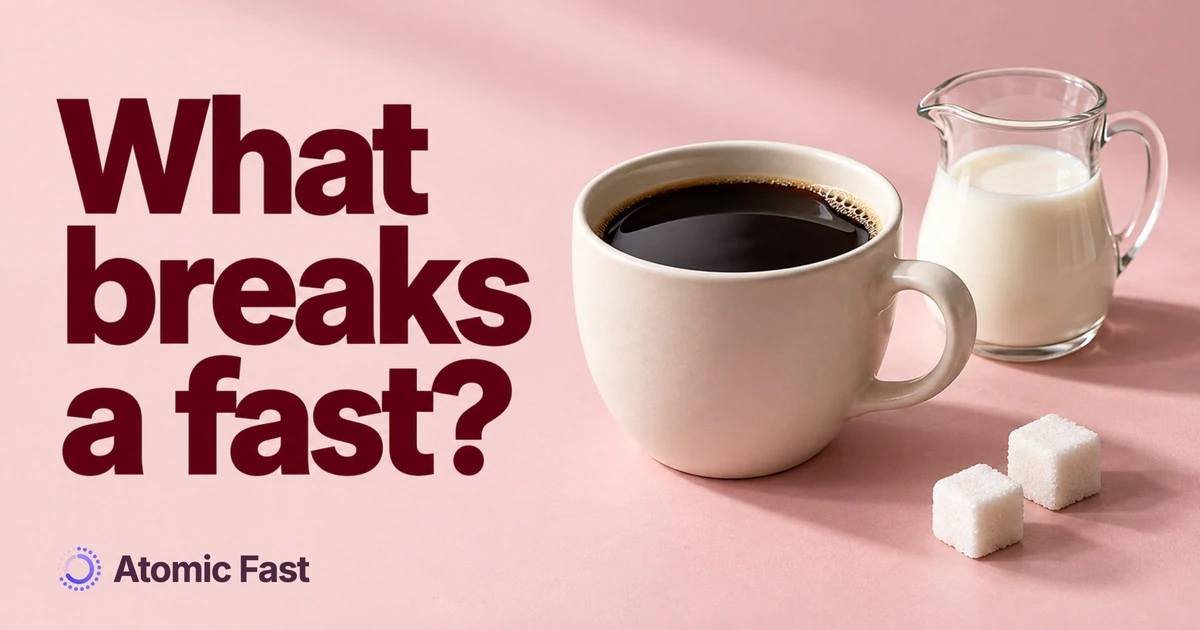
What can I have in the morning without breaking my fast? Water, black coffee, and plain tea. For the full list of what does and doesn’t break a fast, see our guide on what breaks a fast.
Sources
Sources checked: October 11, 2026.
-
Sievert K et al. (2019), Effect of breakfast on weight and energy intake: systematic review and meta-analysis of randomised controlled trials. BMJ (Clinical research ed.) — Thirteen short trials with substantial heterogeneity and high or unclear risk of bias.
-
Betts et al. (2014) — The causal role of breakfast in energy balance and health — The actual Bath Breakfast Project trial in lean adults; corrected from a link to a different study.
-
Bonnet JP et al. (2020), Breakfast Skipping, Body Composition, and Cardiometabolic Risk: A Systematic Review and Meta-Analysis of Randomized Trials. Obesity (Silver Spring, Md.) — Seven trials; includes the LDL increase that a claim of no metabolic downside would overlook.
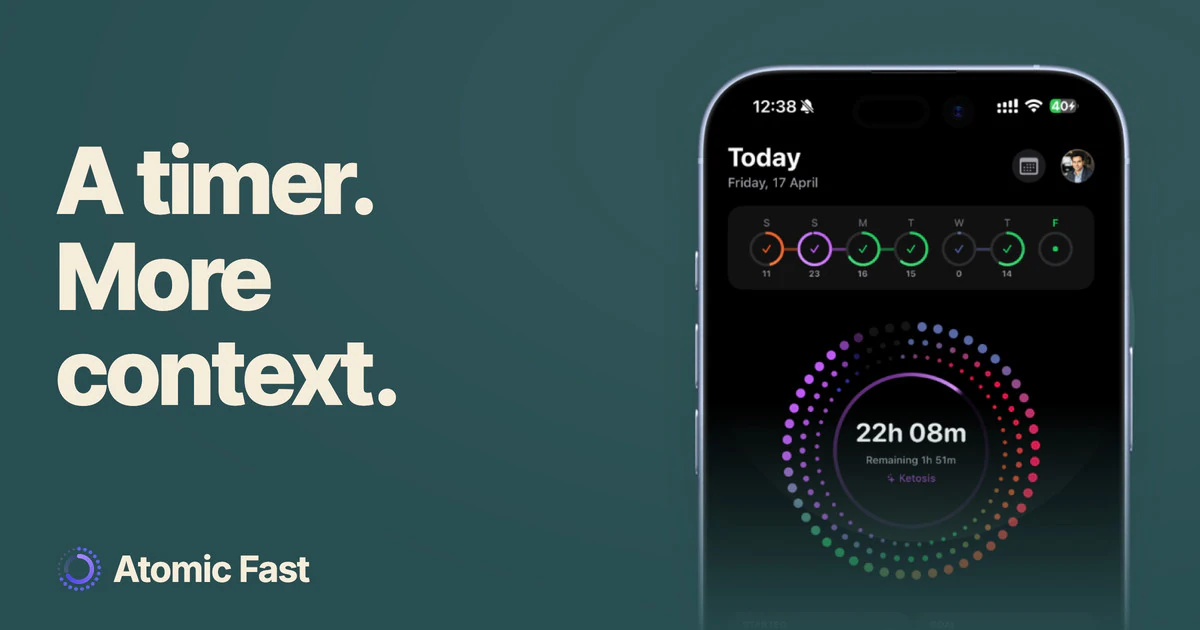
Atomic Fast can record your fasting hours and meal entries; its fixed phase labels do not measure metabolism. Download it on the App Store or Google Play.
This article is for general information and isn’t medical advice. Intermittent fasting isn’t right for everyone. If you’re pregnant or breastfeeding, have a history of disordered eating, take medication (especially for diabetes or blood pressure), or have a medical condition, talk with your doctor before changing when or how you eat.
Try Atomic Fast free
Track your fasts, log your meals, and see how they affect each other, on iPhone and Android.


 Scan to download