Does Time-Restricted Eating Do Anything Special?
A Johns Hopkins feeding trial gave everyone the same food. A 10-hour eating window added no extra weight loss, and no edge on appetite hormones or inflammation either.
Last updated
We build a fasting app, so this is a study we could have quietly skipped. A team at Johns Hopkins ran a tightly controlled trial on the question the whole category tiptoes around: does squeezing your meals into a shorter window change something inside your body, or does it mostly help you eat less? Their answer is mildly deflating, and worth reading straight.
The short version
The 12-week TRIM feeding trial randomized 41 adults with obesity and prediabetes or diet-controlled type 2 diabetes to a ten-hour eating window or a usual eating pattern. Food and calories were matched. Weight loss did not differ significantly between groups. A later analysis of 39 participants also found no clear advantage for the measured appetite and inflammation outcomes; this does not rule out every possible effect of meal timing.
What the study did
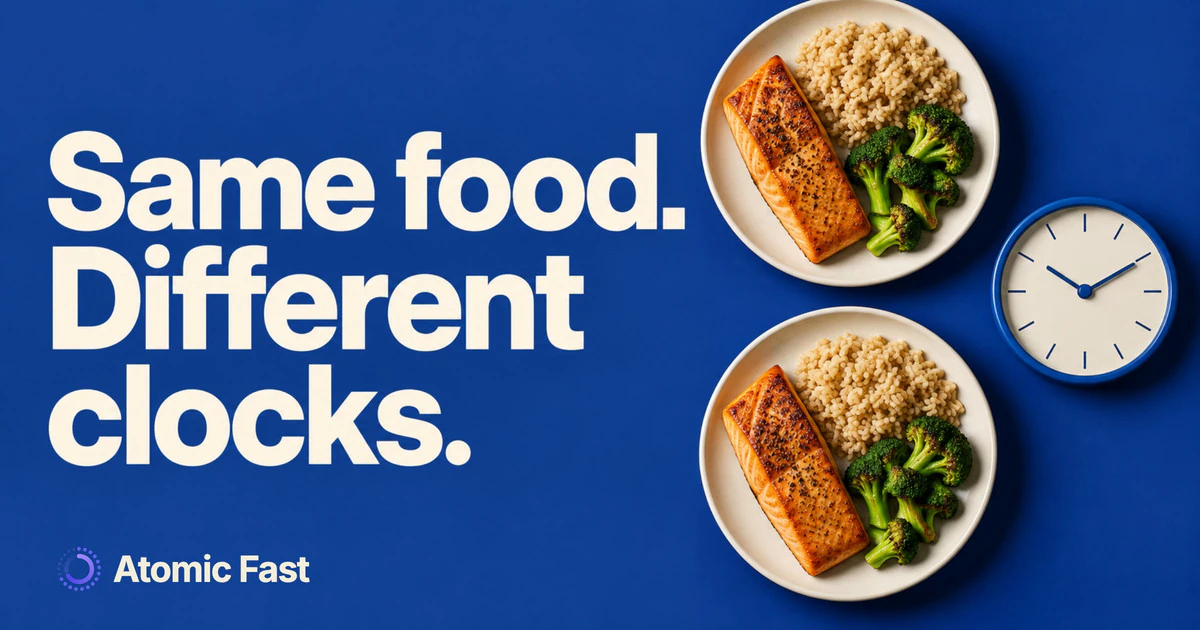
The Time-Restricted Intake of Meals trial (TRIM), led at Johns Hopkins by Nisa Maruthur, did something most fasting studies can’t afford. It provided every meal.
Adults with obesity and prediabetes or diet-controlled type 2 diabetes were randomized for 12 weeks. The time-restricted group ate within a 10-hour window, with about 80% of calories before 1pm. The usual-pattern group ate over a window of up to 16 hours, with at least half their calories after 5pm. Both got the same DASH-style menu from the Johns Hopkins clinical research unit, portioned by research dietitians, with calories set to maintain each person’s starting weight. The randomized cohort was 93% women and 93% Black, with an average age around 59.
That design is the point. In most fasting trials, people who narrow their window also eat less without noticing, so you can’t tell whether results came from the clock or from the smaller intake behind it. Hold the food steady and you isolate the timing.
What they found
The main results appeared in Annals of Internal Medicine in 2024: weight fell by 2.3 kg in the time-restricted group and 2.6 kg in the usual-pattern group, with no statistically significant between-group difference in weight or the reported blood-sugar measures. The authors concluded that weight effects in earlier time-restricted eating studies “may be due to reductions in caloric intake.”
A follow-up analysis led by Daisy Duan, published in Obesity in July 2026, used data from 39 of those participants to examine additional outcomes:
- Appetite hormones. Ghrelin (which drives hunger) and leptin (a satiety signal) were comparable between the groups.
- Inflammation and stress markers. C-reactive protein, cortisol and sRAGE showed no between-group difference.
- Eating behavior. Both groups reported more restraint around food, less eating when stressed, and less susceptibility to hunger.
These are selected outcomes from a post hoc analysis, not a test of every proposed benefit of time-restricted eating.
If both groups lost weight, isn’t that a win?
For the people in the study, sure. But the weight loss happened in both arms, on a diet meant to hold weight steady, so it can’t be credited to the window. A structured, healthier menu, regular meals and the attention of being in a trial are all plausible reasons. The better eating habits showed up in both groups too.
What the trial pushes back on is the bigger sales pitch: that a short window trips some special metabolic or anti-inflammatory circuit that spread-out eating misses. With the food matched, the measured biomarkers did not provide convincing support for that claim in this sample.
That squares with the wider evidence. When we walked through the big Cochrane review of intermittent fasting, the finding was similar: fasting tends to match plain calorie reduction rather than beat it, and it wins on being easier to keep for some people, not on hidden machinery.
How much to trust this
Some, with limits. The secondary analysis was small and was not designed to rule out modest effects. Twelve weeks is short. Almost everyone was a middle-aged Black woman with obesity and prediabetes, so it may not speak to a lean 30-year-old man. The groups also started at somewhat different weights. And the Obesity paper is a post hoc analysis, meaning those questions weren’t the trial’s main target.
Not finding an effect in a small trial also isn’t proof there’s none. A bigger, longer study might find something modest. What this one tells you firmly is not to bank on a dramatic metabolic payoff from the clock alone.
One wrinkle cuts the other way, in fasting’s favor. Because the meals were handed out, this trial can’t tell you how a window performs in real life, where the window itself is what quietly trims your intake. That effect is what makes fasting work for many people, and it’s exactly what this design removed on purpose.
What this means if you fast
Keep a window if it helps you and is appropriate for your health. A defined window is a useful rule because it’s easy to remember and hard to game: when the kitchen closes, the late-night grazing closes with it. The results are won by what you eat inside the window, not by the clock face.
That’s why we pair the fasting timer with a food log: the window is where a gentle deficit either happens or doesn’t. And if 16 hours feels like too much, you don’t need it to get the benefit this trial points to. A window you can actually hold, even 10 or 12 hours, may be a more manageable starting point, although this trial did not compare those options.
In Atomic Fast, the timer keeps the window and the meal log shows what went into it, by barcode, search, a photo of the plate or a typed description (AI photo and description scans are capped at 7 a week on the free plan). The app won’t promise an anti-inflammatory reset this trial couldn’t find.
Frequently asked questions
Does a 10-hour eating window cause weight loss on its own? Not in this trial. With meals matched, the 10-hour group lost about the same as people eating over up to 16 hours. In everyday life, a window helps mainly because it tends to cut how much you eat.
Is time-restricted eating anti-inflammatory? This study didn’t find that. C-reactive protein, cortisol and sRAGE were comparable between the groups after 12 weeks.
So is fasting pointless? No. A window is a simple, low-effort way to eat less without tracking every bite, and that’s a real benefit. Just don’t expect a hidden metabolic bonus on top of eating less.
Did eating earlier in the day make a difference? Not for weight or blood sugar here, even though the time-restricted group ate most of its food before 1pm. A separate analysis of the same trial found their total sleep time rose by about 55 minutes compared with the other group, which is interesting but needs confirming.
I have prediabetes, or take medication for diabetes or blood pressure. Can I try this? Talk to your doctor first. Changing when you eat can shift your blood sugar and how some medications act, and that calls for a real plan, not a guess.
Sources
Sources checked: October 11, 2026.
-
Maruthur NM et al. (2024), Effect of Isocaloric, Time-Restricted Eating on Body Weight in Adults With Obesity : A Randomized Controlled Trial. Annals of internal medicine — Parent trial: 41 randomized participants, matched food and twelve weeks of follow-up.
-
Duan et al. (2026) — TRIM analysis of appetite, inflammation and eating behavior. Obesity — Post hoc analysis in 39 participants from the same trial, not an independent replication.
-
Duan D et al. (2025), Effects of time-restricted eating on actigraphy-derived sleep parameters: post hoc analysis of a randomized, isocaloric feeding study. Sleep — Sleep analysis in a subset of the same trial; the finding needs confirmation.
If you want a simple way to hold a consistent eating window and see what goes into it, Atomic Fast is free on the App Store and Google Play.
This article is for general education and isn’t medical advice. If you’re pregnant or breastfeeding, managing a health condition, taking medication (especially for diabetes or blood pressure), have a history of disordered eating, or are considering fasts longer than 24 hours, talk to a healthcare professional first.
Try Atomic Fast free
Track your fasts, log your meals, and see how they affect each other, on iPhone and Android.


 Scan to download