Food Texture, Eating Speed and Feeling Full
A new appetite study adds nuance to the ultra-processed food debate. What food texture changed, what fullness tests didn't show, and how to read the results.
Last updated
You finish lunch and wonder how it disappeared so quickly. Was the food easy to eat, were you distracted, or was something about the meal keeping you from feeling full?
Those explanations often get bundled together. A new analysis from Wageningen University separates two questions: how much people eat, and how their fullness signals respond afterward. That distinction matters if you’re already watching your eating window and wondering what deserves attention inside it.
The short version
A September 2026 analysis found no clear, systematic disruption of fullness responses after two-week ultra-processed diets, although some combined hunger and fullness ratings did change. An earlier report from the same trial found that slower-to-eat food textures reduced daily calorie intake compared with faster-to-eat textures. These are two reports from one small experiment, not independent confirmation. They give food texture a place in the conversation, without proving that ultra-processed foods are harmless or that eating slowly guarantees weight loss.
The trial changed the food, not the instructions
The RESTRUCTURE trial had 41 completers, averaging 27 years old. Each ate two supplied diets in random order: 14 days of slower-to-eat textures and 14 days of faster-to-eat textures, separated by a two-week break. Roughly 95% of dietary energy came from ultra-processed foods (UPFs) in both conditions.
The researchers matched several things that could otherwise muddy the comparison, including food liking and non-beverage energy density, meaning calories per gram. The menus weren’t nutritionally identical, but this was much more controlled than comparing strangers who happened to eat different foods.
Participants could eat as much as they wanted from the supplied meals. They weren’t told to count their chews or deliberately slow down. Texture did the work of changing their pace. That’s a useful distinction: the experiment tested how meals were built, not whether people could follow another eating rule. The primary report appeared online in November 2025 and in the April 2026 issue of the American Journal of Clinical Nutrition.
Lower intake didn’t establish long-term weight loss
On the slower-texture diet, participants consumed an average of 369 fewer calories per day than on the faster-texture diet. The 95% confidence interval was 221 to 517 calories. The difference persisted across the two weeks.
That is a comparison between the two experimental menus. It isn’t a prediction of what swapping one food at home will do. Nor is it permission to subtract 369 calories from your food log because you took your time over lunch.
The trial found no significant body-weight change or weight difference between diets. It did report a small fat-mass reduction on the slower diet, but two weeks can’t establish lasting weight management. Keep the measured result attached to its setting: supplied food, closely monitored intake and a short experiment.
The new paper asked about fullness signals
The September 24 paper by van Bruinessen and colleagues examined appetite responses in the same trial. Post-meal hormone measurements were available for 32 participants; the full cohort had 41.
The team used a fixed test meal at baseline and on day 11 or 12 of each diet period, then followed responses for three hours. They found no significant differences in post-meal responses of GLP-1, ghrelin, pancreatic polypeptide or PYY. Morning appetite ratings also didn’t progressively change during either diet.
But the subjective results weren’t completely flat. When ratings were combined across the testing period, hunger was higher and fullness lower after the high-UPF diets than at baseline. Differences at individual timepoints weren’t significant. Omitting the combined result would make the paper sound cleaner than it is.
The authors describe preliminary evidence against a clear, systematic disruption of satiety responsiveness under these conditions. That’s narrower than saying processing has no effect on appetite.
What this study doesn’t settle
The randomized comparison was between two high-UPF diets. The lower-UPF baseline was people’s habitual diet, not a randomized, equally controlled comparison period. That weakens conclusions about switching from minimally processed food to ultra-processed food.
Participants were generally healthy, mostly young adults. Results don’t automatically transfer to children, people with diabetes, or people taking appetite-altering medication. Two-week exposure also can’t answer what happens after years of a particular diet.
Funding deserves space here. RESTRUCTURE is a public–private research partnership, and the authors disclose food-industry relationships. Those disclosures don’t erase the measurements; they add to the case for independent replication.
There was no fasting intervention. The studies can’t tell you whether a longer fast changes your response to these meals, or whether a particular texture makes fasting safer. If you’re deciding what to put on the plate after a fast, use this as one consideration alongside the meal itself, not as a replacement for nutrition or medical advice.
What to do with this
The practical idea is to notice how your meals invite you to eat. Treat this as an observation exercise, not a calorie-saving formula.
- Look at one ordinary lunch. Does most of it go down with barely any chewing? Is the meal over before you’ve had a chance to notice it? Start with that concrete description instead of blaming your appetite.
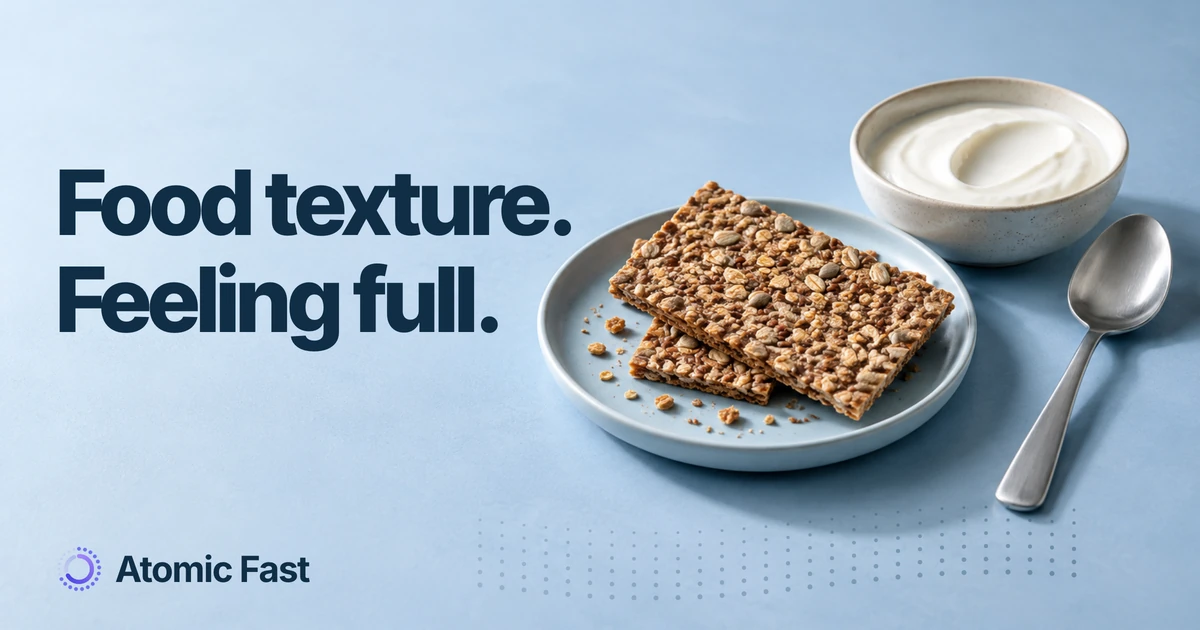
- Consider texture when choosing a meal you enjoy. If chewing is comfortable and safe for you, a meal with some firmer components may be worth trying. This isn’t a prescription to avoid yogurt, soup or other soft foods; texture alone doesn’t determine a food’s nutritional value.
- Give the meal enough time. A rushed lunch may be a scheduling problem. Making room to eat is a more useful experiment than imposing an exact chew count that these researchers never tested.
- Keep the record separate from the explanation. You can record the meal in Atomic Fast using food search or manual food entry. The app doesn’t measure eating speed, fullness or appetite hormones. If you want to compare how meals feel, keep that observation separately and avoid treating it as a diagnosis.
There’s a reason to pay attention to the food alongside the fasting timer. A completed fast doesn’t tell you how lunch went. You can keep a workable eating schedule while giving the meal itself a closer look.
Frequently asked questions
Does this mean ultra-processed food is healthy? No. These reports address particular eating and appetite outcomes. They aren’t an overall health assessment of every food in a very broad category, and they don’t establish long-term safety.
Should I make every meal crunchy? No. Crunch isn’t a nutritional target. Choose food you can chew and swallow comfortably, and follow any texture advice from your clinician. A bowl of soup doesn’t become a bad meal because it’s soft.
Is this a reason to shorten my eating window? The research didn’t compare fasting schedules. It offers no basis for tightening yours. If timing already feels difficult, focus on choosing a window you can keep rather than adding restrictions from an unrelated experiment.
Can I use an app to tell whether my fullness hormones are working? A food log can’t answer that. Atomic Fast records meals; it doesn’t test appetite regulation. Persistent or concerning changes in appetite deserve a conversation with a healthcare professional, not an interpretation of your timer.
Sources
Sources checked: October 11, 2026.
-
Forde CG et al. (2026), Eating rate has sustained effects on energy intake from ultraprocessed diets: a 2-week ad libitum dietary randomized controlled crossover trial. The American journal of clinical nutrition — Primary intake report: 41 completers eating two supplied diets for fourteen days each.
-
van Bruinessen M et al. (2026), Satiety responsiveness following dietary exposure to ultra-processed foods differing in texture-derived eating rate: a secondary analysis of a randomized controlled crossover diet intervention. European journal of nutrition — Secondary appetite analysis of the same trial; hormone data were available for 32 participants.
Keep your fasting timer and meal log together with Atomic Fast on the App Store or Google Play.
This article is for general education and isn’t medical advice. If you’re pregnant, managing a health condition, taking medication, have a history of disordered eating, or are considering fasts longer than 24 hours, talk to a healthcare professional first.
Try Atomic Fast free
Track your fasts, log your meals, and see how they affect each other, on iPhone and Android.


 Scan to download