Why Fasting Makes You Hangry (and How to Handle It)
Getting short-tempered during a fast is real, not a lack of willpower. Here's what research says about hunger and irritability, and the simple moves that calm it down.
Last updated
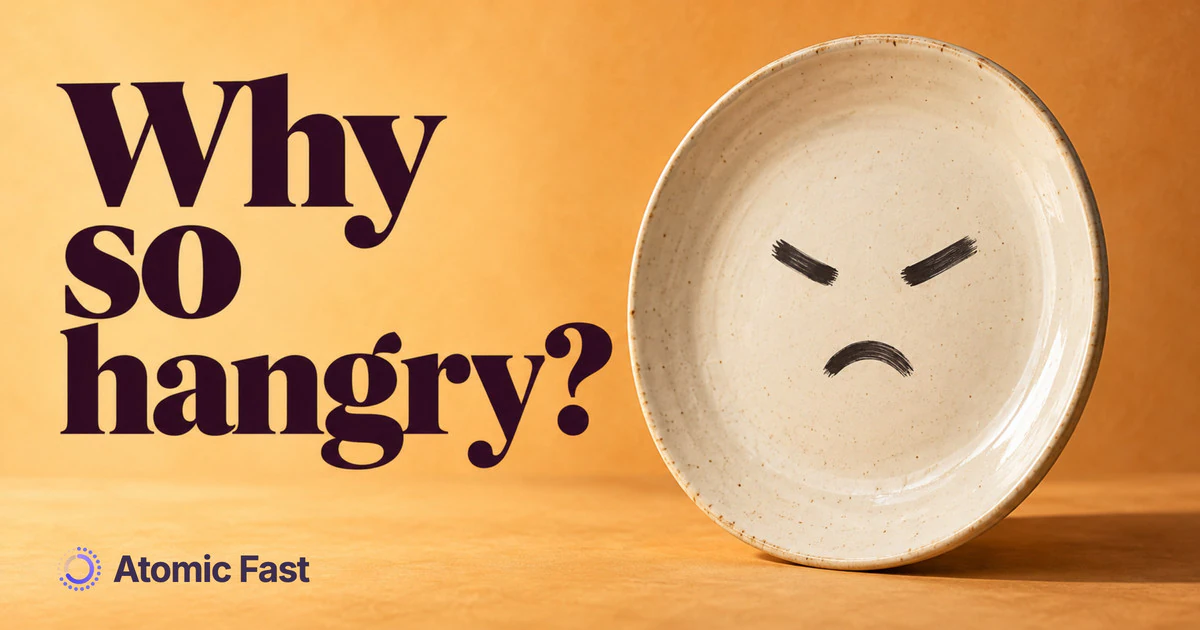
You’re a couple of hours from breaking your fast, someone asks you a perfectly reasonable question, and you snap. Then you feel bad about snapping. If fasting has been making you short-tempered, you’re not weak and you’re not doing it wrong. Hangry is a real, measurable thing, and once you know what’s happening it’s a lot easier to ride out.
The short version
A three-week field study found that greater self-reported hunger went with greater anger and irritability. It did not test a fasting intervention or measure glucose and stress hormones. If a schedule regularly leaves you irritable or preoccupied with food, adjust it. Shakiness, faintness or confusion needs a different response from ordinary crankiness.
Hangry is measurable
For a word that sounds like a joke, “hangry” has decent evidence behind it. In a 2022 study in PLOS ONE, 64 adults in Central Europe rated their hunger, anger, irritability and mood five times a day for 21 days, over 9,000 check-ins in all. Higher hunger went with more anger and irritability and less pleasure, both on hungry days and in people who tended to be hungrier overall.
It’s self-report, and the researchers didn’t measure blood sugar or hunger hormones, so the study shows the link in everyday life rather than the mechanism. But it confirms what most fasters already suspect: the mood dip is real, and it isn’t a character flaw.
Why an empty stomach makes you edgy
The field study cannot identify a hormone mechanism. It measured what people reported feeling, not cortisol, adrenaline or glucose. It also did not assign people to fast, so it cannot prove fasting caused their mood changes.
Sleep, stress, food availability and the surrounding situation may all matter. Feeling irritable does not mean glucose is dangerously low, but it also should not be used to dismiss other symptoms.
It comes in waves, not a rising tide
Appetite and mood can change during the day. There is no guarantee that the worst moment is already passing or that waiting is the right response. Our hunger guide explains the limits of the wave metaphor.
You are allowed to eat before the planned end. A useful routine should make adequate meals easier to organize, not require you to endure recurring distress.
What helps in the moment
Pause the argument or stressful task if you can, and check whether you need food, fluids or rest. A brief change of scene can help you respond calmly, but it is not a substitute for eating when needed.
If the same time of day repeatedly causes problems, move or widen the eating window rather than trying to suppress the symptoms. Do not use salt as a general fix for shakiness; follow the medical guidance below.
An ordinary meal is different from treating low glucose
For an ordinary meal, choose food that suits your needs and that you can eat comfortably. Our break-fast meal guide gives balanced examples without promising to control mood.
Suspected or measured low glucose is different. People with a diabetes treatment plan may need fast-acting carbohydrate promptly. Do not replace that treatment with a protein-first rule. NIDDK explains treatment and follow-up.
Review the routine instead of waiting for a deadline
An expert overview from Johns Hopkins describes hunger and crankiness during adjustment. It does not provide a guaranteed deadline or establish that continuing is the right choice for everyone.
Review your first week for adequate meals, sleep and effects on daily life. Persistent distress deserves a change in plan or support, not more restriction.
When it’s more than hangry
Ordinary irritability is one thing. Feeling faint, confused, trembling, or a pounding, racing heart is another. Don’t push through that: eat something, and if it keeps happening, talk to a doctor.
If you take medication for diabetes or blood pressure, don’t freelance your fasting schedule. Diabetes drugs such as insulin can push blood sugar too low when you skip meals, and blood-pressure medication may need its timing rethought too. The fix is a conversation with your doctor before you change anything, not a pinch of salt.
Where Atomic Fast helps
The app can’t read your blood sugar or your mood, but it can show you where you are when the wave hits. The free timer labels each stage of a fast by hours elapsed, and between hours 8 and 12 (Glycogen Depletion) the stage sheet reminds you that hunger comes in waves that pass. If the same cranky hour keeps catching you, move your next fast: Start Now, backdate it with Since Last Meal, or Schedule for Later so it begins on its own at a better time. And logging what you break the fast with, by photo, typed description or barcode, makes it easy to notice whether a protein-first meal leaves you steadier than a sugary one.
Frequently asked questions
Is being hangry measurable? The cited study found an association between self-reported hunger and negative emotions. It did not measure a biological cause or test a fasting schedule.
How long until it stops? There is no dependable timetable. Adjust a schedule that repeatedly affects mood or daily life.
Should I avoid sugar even if my glucose is low? No. Follow your agreed hypoglycemia treatment plan, which may require fast-acting carbohydrate. An ordinary meal recommendation is not emergency treatment.
Is shakiness the same as crankiness? No. Shakiness, faintness, confusion or other concerning symptoms need assessment and may require urgent treatment.
Can Atomic Fast tell what causes my mood change? No. It records time and meal entries; it does not measure mood, glucose or stress hormones.
Sources
Sources checked: October 11, 2026.
-
Swami V et al. (2022), Hangry in the field: An experience sampling study on the impact of hunger on anger, irritability, and affect. PloS one — Sixty-four participants and 9,142 check-ins; association rather than proof of a fasting or hormone mechanism.
-
NIDDK — Low Blood Glucose (Hypoglycemia) — Symptoms and treatment planning for low blood glucose; do not substitute salt or waiting for an agreed treatment.
-
Johns Hopkins Medicine — Intermittent Fasting: What is it, and how does it work? — General precautions and groups advised not to fast.
Atomic Fast is free on the App Store and Google Play. Next time the 4pm wave hits, you’ll know which stage you’re in.
This article is for general education and isn’t medical advice. If you’re pregnant, managing a health condition, taking medication (especially for diabetes or blood pressure), have a history of disordered eating, or are considering fasts longer than 24 hours, talk to a healthcare professional first.
Try Atomic Fast free
Track your fasts, log your meals, and see how they affect each other, on iPhone and Android.


 Scan to download